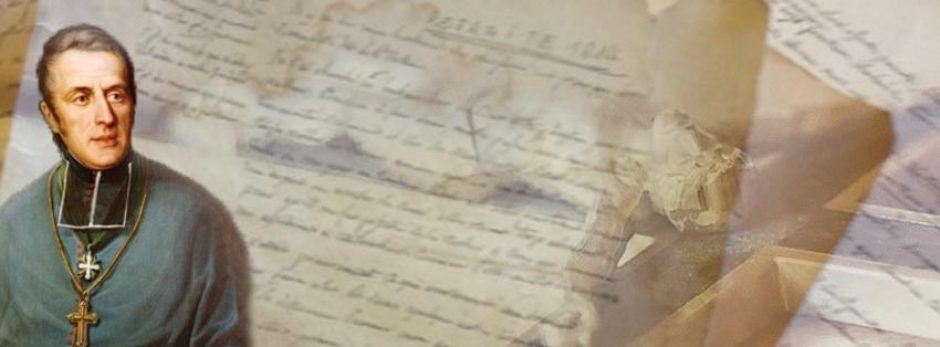
Having corrected Fr Courtès above, the conclusion of this letter is typical of Eugene’s style. When he had to reprimand an Oblate, he would do it directly and did not pull his punches. Then he would be aware of a possible hurt that he could have caused the person by his directness, and immediately tried to soften the blow with his personal and fatherly affection.
Letter to Hippolyte Courtès, 26 September 1827, EO VII n 282 Similarly, Fr. Honorat had made a journey to Aix without telling Eugene, and had succeeded in disturbing the arrangements for a parish mission in the process. Eugene’s reaction was direct, but humane.
Letter to Jean Baptiste Honorat, 6 October 1827, EO VII n 286
“You cannot reprimand a person without love and charity. (Just like) you cannot perform surgery without anaesthesia: you cannot, because the patient will die from the pain.” Pope Francis
|
-
Recent Posts
Recent Comments
- Eleanor Rabnett, Lay Oblate on THROUGH A GIFT OF THE FATHER OUR OBLATE FAMILY CHOOSES THE WAY OF THE EVANGELICAL COUNSELS (C12)
- Eleanor Rabnett, Lay Oblate on THE EVANGELICAL COUNSELS ARE INDISPENSABLE (C12)
- Eleanor Rabnett, Lay Oblate on ALL MEMBERS OF THE OBLATE CHARISMATIC FAMILY CHOOSE THE WAY OF THE EVANGELICAL COUNSELS (C12)
- Eleanor Rabnett, Lay Oblate on BEATITUDES: TO CONTINUALLY RENEW OURSELVES IN THE SPIRIT OF OUR VOCATION (C11)
- Eleanor Rabnett, Lay Oblate on LEAVEN OF THE BEATITUDES AT THE HEART OF THE WORLD (C 11)
Archives
Meta
-
I can’t help but wonder how some of Eugene’s men felt when they received his letters. I wonder if they ‘took it on the chin’ or if they felt like they’d been hit by a steam roller (or something really big) that knocked them down and rolled on over them. How many of them needed time to take it all in and then respond (or react). One thing though that I am sure of, is that they all knew how very much they were loved by Eugene. I wonder if they felt they had to agree or if they could question and doubt – not so much to fight against, but just to work it out within themselves? Did they feel heard or did they even need to feel heard. Of course everything then was not quite as instant as it is now with us here – no telephones, no internet or email and no hopping-in-the-car to meet and have a chat – time then was simply a part of life.
I love the way that Pope Francis spoke of it, he reminds me of the gospel when Jesus was a boy and Mary and Joseph found him in the temple. Mary and Joseph were frantic and when they found him he responded to their questions with a response of who his Father was and how he had to go about his father’s business. The Gospel ends with Mary (and no doubt Joseph) pondering what he said, holding it in her heart and the three of them continuing on their journey.
Many years ago one of my bosses was talking about me with some others. He said that when coming to me with the need to reprimand or to make some sudden changes that it was necessary to be clear and open and then to give me a little time to work through it and speak how I was feeling about it. Then he said, I would make the changes – whether they were in myself or what was being done. He was very perceptive. It said as much about him as it did about me. It said much about love, about reprimands and hugs.