IF ALL BUT KNEW THE GIFT OF GOD!

“I, the light, have come into the world” (John 12:46)

Jesus speaks about choices in today’s Gospel (John 12:44-50): between human praise or God’s approval, between politically-correct ideals or the values of God, between the darkness of sin and death or the light that helps us to see God’s presence, guidance and promise.

If all but knew the gift of God!

Exclaims Eugene, recalling his conversion:

… Judging by the consolations God was pleased to give me at that happy moment when I chose him as my inheritance.

From the vantage point of the Savior, he looked at those around him who were lost and directionless.

A single glance, fixed with courage on God and on all that God contains, would undeceive them to their great advantage. Unfortunately, they dare not raise their eyes to see the light that shines in every direction.

Letter to his mother, 18 December 1808, EO XIV n 36

We have choices to make in these ongoing scary and uncertain days: lockdown, personal freedom, masks, precautions and respect for those around me, the desperation of people to work, the long food lines… The Light has come into the world, how do I allow it to enlighten my choices, to reflect light and to spread light today in response? Remember St John Newman’s magnificent prayer: “Lead, kindly Light, amidst the night’s encircling gloom…”
Posted in WRITINGS | 1 Comment

YOU CARRIED THIS REBEL ON YOUR SHOULDERS, WARMED HIM AGAINST YOUR HEART, WASHED HIS WOUNDS

“The sheep that belong to me listen to my voice; I know them and they follow me. I give them eternal life; they will never be lost (John 10:27-28)

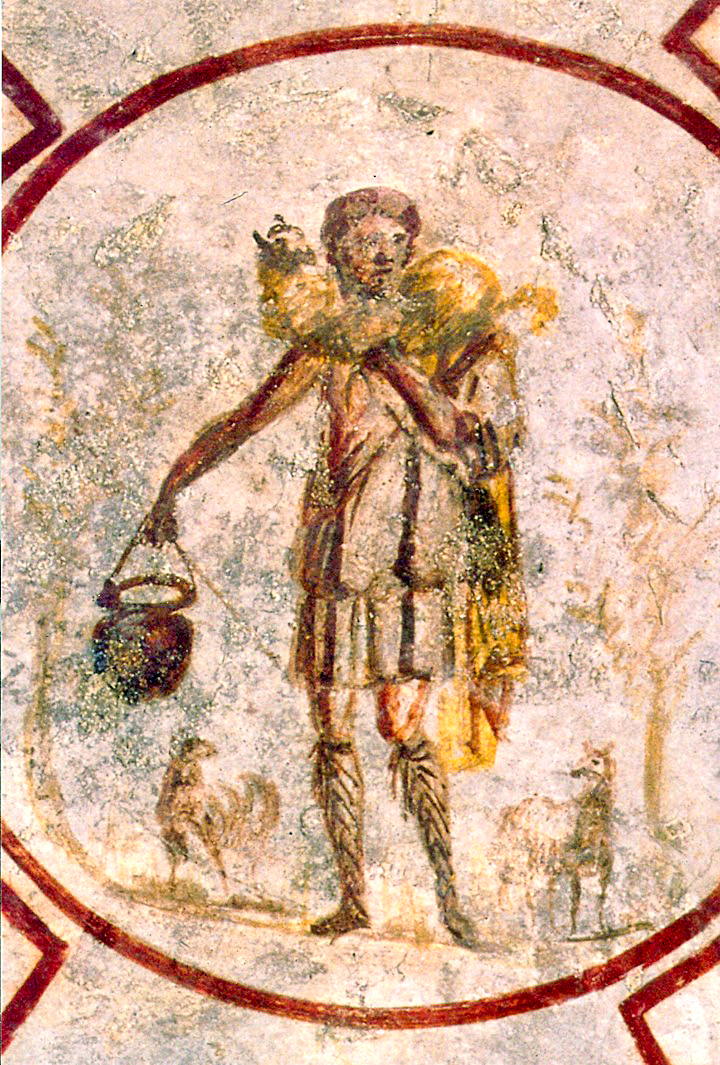
The Shepherd has two credentials: his intimacy with his sheep (he knows them and they know him) and his total dedication of proving his unconditional love by laying down his life to protect them.

To “know” in today’s Gospel (John 10:22-30) refers to a deep mutual relationship which is built on personal contact and the experience of communion.

I have loved you with an everlasting love; I have drawn you with unfailing kindness.” says the prophet Jeremiah (31:3). Isaiah reminds us: “Can a mother forget the baby at her breast and have no compassion on the child she has borneThough she may forget, I will not forget you!” (49:15)

Eugene expressed the same experience reflected on himself as having been the prodigal son:

O my God, don’t I have every reason to devote myself entirely to your service, to offer you my life and all that I am, so that all that is in me may be employed and spent for your glory? For by how many titles do I belong to you? Not only are you my Creator and Redeemer, as you are all men’s, but you are my special benefactor and applied your merits in an altogether special way to me; my generous friend, you forgot all my acts of ingratitude to help me as powerfully as if I had been always faithful to you; my tender father, who carried this rebel on your shoulders, warmed him against your heart, washed his wounds. (XIV:95)

Today, let us focus on that intimacy that we know and are known by the Good Shepherd. Let us make time to savor that intimacy today – proved by his not abandoning us in difficulty, but laying down his life for us. In our dark and difficult days, he sustains us and gives everything for us.

Posted in WRITINGS | 1 Comment

OPEN YOUR EYES AND RECOGNIZE THE GOOD SHEPHERD AROUND YOU

“I am the good shepherd; I know my own and my own know me, just as the Father knows me and I know the Father; and I lay down my life for my sheep.”    (John 10:14-15)

The Shepherd has two credentials: his intimacy with his sheep (he knows them and they know him) and his total dedication of laying down his life to protect them

There is no need for words to explain today’s Gospel (John 10:11-18). Just open your eyes and look around you today. Look at those who endanger their lives to provide us with essential services – here is the presence of the Good Shepherd.

Look at those who literally and figuratively give their lives as first responders, as medical personnel, as accompaniers of the dying and the grieving – here is the presence of the Good Shepherd.

Open your eyes to see the presence of the Good Shepherd all around you saying: “I have no hands but yours, I have no heart but yours, I have no mouth but yours…”

In a letter to his mother in December 1808, St Eugene wrote:

I will just tell you that the Lord is rich indeed and above all very generous, for indeed he amply repays us for the poor little deeds we offer him. What does the world amount to? Indeed, far from setting any value on the sacrifice we make of it to God, ought we not to count ourselves most blessed that he lets us strip ourselves of all that is contemptible, abject, perilous, to receive in exchange all that is greatest, most consoling, in a word his very self.

If people but knew the gift of God!

Posted in WRITINGS | 1 Comment

HOW WONDERFUL THIS COMMUNION IN WHICH TURNS THE WHOLE UNIVERSE INTO ONE SINGLE, LARGE FAMILY

“He who eats my flesh and drinks my blood lives in me and I live in him.”  (John 6: 56)

What a beautiful image of communion today’s Gospel (John 6:52-59) gives us! What we eat becomes totally a part of our being. Jesus is the Bread of Life who nourishes his people through a communion of becoming one physically and in every other sense. Communion of living in each other.

Saint Eugene reflects on communion in a reflection on the Feast of All Saints:

One of the thoughts that strikes me most about our holy religion is the thought of its catholicity; in my mind’s eye I scan the whole wide world and everywhere it numbers people as brothers [and sisters], it would not be easy to find any part of the inhabited globe where the fact of being a child of Jesus Christ and his Church would not assure the Christian of a welcome as an envoy of the Lord and not meet with an abundance of tender care flowing from the most ardent charity and poured forth in the name of him in whom all hearts who have seen the light are joined together….

How wonderful this communion in which turns the whole universe into one single, large family whose interests are common, needs are similar, helps are mutual

The Bread of Life is broken for others, so we remember that our communion with Jesus contains the element of being broken for others – something that the pandemic makes us urgently aware of.

Posted in WRITINGS | 1 Comment

STOP ORBITING AROUND YOURSELF

“I tell you most solemnly, everybody who believes has eternal life. I am the bread of life.”   (John 6:47-48)

Today’s Gospel (John 6:44-51) brings together all the themes we have been presented with during these days. The people started with a misunderstanding about bread and Jesus led them step-by-step to the full revelation: they must believe that he is the Bread of Life who gave his life for the life of the world on the Cross.

The Bread that is broken on the Cross for our salvation and the Bread that saves us through eating and becoming fully a part of our lives.

In 1807, Eugene portrayed this conviction to his friend, Emmanuel Gaultier de Claubry, who was being mistreated because he was a Christian:

So do not be at all shaken by the persecutions that come your way, for you know that that is our destiny, the Master having told us that “we will be hated universally on account of his name.(Luke 21:17)” That is why we must look for our joy solely in the various afflictions that befall us and the persecutions to which we are exposed, knowing that the testing of our faith produces patience.(James 1:23) Let us turn to God with fervour and we shall not be deceived, for the Lord’s eyes are on the just and his ears listen to their prayers. 

Pope Francis has invited us to a new focus while enduring difficulties:


Posted in WRITINGS | 1 Comment

THERE IS NOTHING FRAGILE ABOUT THIS COVENANT

Now the will of him who sent me is that I should lose nothing of all that he has given to me, and that I should raise it up on the last day. Yes, it is my Father’s will that whoever sees the Son and believes in him shall have eternal life (John 6:39-40)

In these days in which we have been following the teaching of Jesus on the Bread of life, let us remember that Jesus was talking to the Jewish people, who belonged to God through the Covenant. In today’s Gospel (John 6:35-40) he leads them one step further: He is the revelation of God – and he leads them to a greater understanding of their covenant relationship to know God as God really is, and to enter more fully into that relationship of life and love that they already have and which will not be taken away from the.

It was this conviction of St. Eugene which reassured him and made him a comforter of others, as we see in this letter to Fr Casimr Aubert in 1850.

The fifteen days, my dear son, which have elapsed between your last letter and that which I have just received today have been days of bitterness for me. The sole thought of the grief you were enduring and all your worries…

One would be unworthy to belong to God and the Church if one let oneself be laid low by tribulations.

The Coronavirus is making us realistically aware of how fragile our existence can be, and invites us to the reassuring realization that, through our baptism, we belong to God and are in relationship with God – and there is nothing fragile about this covenant!

Posted in WRITINGS | 1 Comment

TODAY WE DESPERATELY SEARCH FOR SIGNS, YET THERE IS ONLY ONE LASTING FOCUS

‘Sir,’ they said ‘give us that bread always.’ Jesus answered: ‘I am the bread of life. The one who comes to me will never be hungry; whoever believes in me will never thirst.’  (John 6: 34-35)

The people in today’s Gospel (John :30-35) are looking for free bread, and ask for a sign like Moses had given centuries earlier to their ancestors: manna in the desert. Jesus takes it from there and invites them to recognize in him the sign by going beyond focus on physical existence to the gift of God that gives life.

If they come to him they will have their hunger satisfied. If they believe in him they will never thirst for anything less.

A theologian (Bultmann) described God’s revelation as destroying every picture that the desires of a person  invents, so that the real test of a person’s desire for salvation is to believe even when God acts in a way that is totally different from what the person expected.

St Eugene’s life was guided by his hunger and thirst to live as God wanted, as he noted in his journal in 1833:

There is no need of regrets when one has done one’s best. God makes use even of human mistakes to achieve his purpose. I do not know what he expects of me; all I know is that he governs with his wisdom those whose sole purpose is to work for his glory… If God has decided differently, he will direct events and bend the will of his creatures in such a way as to achieve his ends.

Today we desperately search for signs, yet there is only one lasting focus: “The one who comes to me will never hunger or thirst”

Posted in WRITINGS | 1 Comment

WE ARE FORCED TO A COMPLETE REORIENTATION OF OUR LIFE AND RELATIONSHIPS

Then they said to him, ‘What must we do if we are to do the works that God wants?’ Jesus gave them this answer, ‘This is working for God: you must believe in the one he has sent.’ (John 6: 28- 29)

In today’s Gospel (John 6:22-29) the people had been given free bread, so the next day they went out of their way to look for Jesus so as to receive more. Understanding their motivation, Jesus tells them not to look for bread that will eventually go stale and have no value, but for the “food that endures to eternal life.” They then ask what they must do to receive this. It is here that Jesus tells them to believe in the one God has sent.

“The ‘work of God’ is singular in nature, namely to believe the one sent by God. Belief in the one sent by God is not mere intellectual assent bur a complete reorientation of one’s life and personal relationship with him” (S.M. Lewis SJ)

Eugene, who had spent so many years “looking for happiness outside of God” knew this well and expresses this in a letter to one of his Oblate missionaries in Canada in 1857.

Then, in spirit, I pressed you to my heart, touched to the point of tears by all that you have had to suffer to conquer those souls for Jesus Christ, who has clothed you with his power and sustained you by his grace among so many difficulties. But also, what a reward you will have beyond this world, when one thinks of the wonders that have been brought about by the power of your ministry. One has to go back to the first preaching of Saint Peter to find anything similar. An apostle like him, sent to proclaim the Good News to those savage nations, the first man to speak to them of God, to bring them to knowledge of Jesus the Savior, to show them the way that leads to salvation, to give them rebirth in the holy waters of baptism – one can only prostrate oneself before you, so privileged are you among your brothers in the Church of God by reason of the choice that he has made of you to work these miracles. 
Letter to Fr. Faraud 28 May 1857

How is the pandemic leading me to re-orientation of my life and relationships? Where am I looking for the food that leads to eternal life?

Posted in WRITINGS | 1 Comment

“Eugene de Mazenod 101” – becoming a cooperator of Christ the Savior

The fifth presentation of our online video course, “Eugene de Mazenod 101” is available as from today: A Vocation to be a Cooperator of Christ the Savior as a Priest

Last time, we left Eugene at the foot of the Cross one Good Friday. In this presentation we follow him as he discerns what God invites him to do with his life and how he prepares himself to respond.  God laid the foundations stones on which the rest of his life was to be built.

As we accompany St Eugene, God invites each of us to reflect on our own discernment and the foundation stones on which our lives are built.


You can join Eugene’s journey at any time. Each presentation is published every two weeks and remains available until the end of this year. It is a non-academic course, with material available for further reading and for personal reflection – which can be used for meetings of the various component groups of the Mazenodian Family.

It is being offered by Oblate School of Theology in English and Spanish. We aim to offer this in French in June and in Italian in the near future. For further details: https://moodle.ost.edu/course/index.php?categoryid=28

Posted in WRITINGS | Leave a comment

WHERE CAN WE BUY SOME BREAD FOR THESE PEOPLE TO EAT?

Looking up, Jesus saw the crowds approaching and said to Philip, ‘Where can we buy some bread for these people to eat’?” (John 6: 5)

We are familiar with this narrative of today’s Gospel (John 6:1-15) where Jesus multiplied the loaves and the fishes and fed the crowd. As we see from the verses that follow, Jesus was referring to holistic nourishment: physical and spiritual food. Today, once again in isolation for many of us, let us focus on the nourishment of the Word of God.

Quoting the Prophet Amos 8:11: “Behold, there shall come days when I will send famine upon the land, not a hunger for bread which nourishes the body, nor a thirst which water satisfies, but the hunger and thirst to hear the Word of God,” St. Eugene wrote:

Often the action of grace precedes the preaching of the Gospel and when hearts are touched by the first words of this marvelous preaching, they feel the need to open themselves […] to receive the divine seed.

Bishop de Mazenod, Pastoral Letter 1844.

May this day be an opportunity for us to spend time open ourselves to receive the divine seed – and allow that seed to bear fruit in ourselves and others.

May it also be a day when we become aware of people in our neighborhood repeating the words of Jesus: “Where can we buy some bread for these people to eat?” – and respond generously to the needs of a foodbank or feeding scheme in our area.

Posted in WRITINGS | 1 Comment