-
Recent Posts
- FOR THE REST, I DO MY BEST TO LEAVE IT TO GOD
- GOD ALONE KNOWS HOW TO REWARD WHAT WE HAVE DONE FOR HIM. SO, WE MUST DO EVERYTHING TO PLEASE HIM
- IT IS A CONSOLATION FOR ME TO BREATHE THE SAME AIR, TO OFFER THE HOLY SACRIFICE ON THE SAME ALTARS, TO BE ABLE TO PRAY AT HIS TOMB
- THERE IS NOT A CORNER OF ROME WHICH IS NOT A MONUMENT OF FAITH OR PIETY
- THE ROMAN MARTYRS ARE STILL THE OBJECT OF VENERATION OF PEOPLES
Recent Comments
- Eleanor Rabnett, Lay Oblate on FAITH-FOCUSED INVESTMENT GROUPS: A PRESENCE WHERE DECISIONS AFFECTING THE FUTURE OF THE POOR ARE BEING MADE (Rule 9a)
- Eleanor Rabnett, Lay Oblate on VIVAT: A PRESENCE WHERE DECISIONS AFFECTING THE FUTURE OF THE POOR ARE BEING MADE (Rule 9a)
- Eleanor Rabnett, Lay Oblate on WE SHOW A VERY HUMAN FACE OF JESUS TO THE WORLD, ONE FULL OF COMPASSION AND SOLIDARITY (Rule 9a)
- Eleanor Rabnett, Lay Oblate on JUSTICE, PEACE AND THE INTEGRITY OF CREATION AS AN INTEGRAL PART OF EVANGELIZATION (Rule 9a)
- Eleanor Rabnett, Lay Oblate on WALKING THE LINE BETWEEN PROPHETIC VISION AND SPIRITUAL SUSTENANCE (CONSTITUTION 9)
Archives
Meta
-
THE MISSIONS AND OTHER WORKS OF ZEAL EMBRACED BY OUR CHARISM
In Canada the Oblates had arrived to begin their mission in Bytown (Ottawa today) and their bishop had written about this to Eugene. He was the second Canadian bishop to have welcomed the Oblates.
The letter that you have done me the honour of writing filled me with a holy joy. You also have adopted and placed under your pastoral mantle the sons of Mary Immaculate. They already had a father and a very good father in our dear and venerable friend, the bishop of Montreal and now Providence gives them a second father in your person whose kindnesses and powerful protection they have already experienced. Do not doubt, Monseigneur, that they have for you the same sentiments that they bear for him who first called them into his diocese and confided to them the worthy ministry that they have exercised for several years with blessings from God.
The Oblates of Mary Immaculate are eminently men of the bishops, founded only to be instruments in their hands of their own ministry for the sanctification of their flocks. The bishops have no priests more submissive, more devoted than them. (See my comment on this expression in https://www.eugenedemazenod.net/?p=4885).
While assuring the bishop of their pastoral cooperation, Eugene stresses ” the missions and other works of zeal embraced by their Institute” – Oblate pastoral cooperation always need to keep our distinctive characteristic and mission in mind. Whatever work we accept in a diocese has to be in keeping with our God-given charism.
GOD WILL HELP ME; IT IS HIM WHOM I INVOKE
Attendance at Vespers and at the sermon at the work of la Jeunesse [the Youth]. I gave the blessing.
Eugene then writes details of a very difficult situation that he had to handle in this institution, and concludes
This is one of the most delicate matters of my episcopate – through which I have had the good fortune, thanks to God, of bringing about good until the present.
There had been a serious problem with the behavior of the director of this work, who was blind to the mistakes he was making and stubbornly resisted correcting the situation.
It remains to be seen what I will have to decide later with regard to the director whom I was able to cover with my pastoral mantle, but who was not capable of obtaining my appreciation nor my affection by his evasive and very unacceptable conduct since I had exceeded all measures of mercy and of more than paternal kindness towards him. God will help me; it is him whom I invoke.
Eugene de Mazenod’s Diary, 28 July 1844, EO XXI
Whenever Eugene faced a difficulty. this was his immediate approach: ” God will help me; it is him whom I invoke.”
IS THERE SUCH A THING AS A MAZENODIAN SPIRITUALITY?
When asked “Is there such a thing as a Mazenodian spirituality?” the answer is YES! The Holy Spirit gave us a charism, through St Eugene, and the Holy Spirit gives us the means to apply this charism in our daily lives.
Every six years the Missionary Oblates have a gathering of representatives from the whole world, called the “General Chapter.” During this long meeting there is a review of all the ministries over the previous six years and an evaluation of how faithful we have been to the charism we have received from the Holy Spirit and how we are called to respond in the future to the needs of the most abandoned.
This Mazenodian identity is meant to be imparted in a deep way at the novitiate in a particular way.
And concerning the novices, neglected far too much is their exterior deportment; so is their training for serving at ceremonies with honor. They take on an awkwardness which is very difficult to correct. I have been able to verify this in the choir of the cathedral, at the altar, and elsewhere. They are excessively negligent in regard to their persons.
I have noticed that they are not required to memorize our Rules and those prayers particular to our Society.
It seems that they are not required to give an account of their meditations, a practice to which I always held as quite essential, especially for beginners. The practice of writing out a review of the week and some other useful practices which were formerly observed at the novitiate have also been lost.
Letter to Father Vincens, at N.-D. L’Osier, 23 July 1844, EO X n 849
Eugene’s concern about being familiar with the charism and spirituality does not only apply to Oblates, but to all members of the Mazenodian Family. It is the charism and spirituality that draws us together. How familiar are we with it? How important is it in our daily lives as a guiding light?
DO I HAVE A DISTINCTIVE MAZENODIAN CHARACTERISTIC?
The novitiate year is the most important moment to concentrate on the formation of the specifically Oblate character of our life, charism and spirituality. This is done through the lived example of the Oblates, the courses taught and the accompaniment in developing a particularly Mazenodian spirituality.
What Eugene writes applies specifically to the Oblate brothers and priests, however, the spirit behind what he communicates is applicable to every member of the Mazenodian Family. It is a call to each of us to review the quality of our own devotional life.
Father Guigues, on his way to Canada, had written some observations to the Founder about some of those who had completed the novitiate. Eugene took action by writing to the Novice Master, Father Vincens, with some words of advice.
I must tell you for your guidance that Father Guigues, in the letter that he wrote me from Le Havre, feels obliged to remind me of certain things. He says that it would be very beneficial to instil in our Oblates the idea that they must never neglect, by their own fault, spiritual exercises, rosary, particular examen, mental prayer, all fiddle-faddle! from which I conclude that his companions did none of these things.
If things like this are not much appreciated before being a priest, it is to be feared that they will be neglected even more afterward.
I might add that the community will always lack the distinctive characteristic which marks the difference between religious communities and those which are simply ecclesiastical societies.
When novices are learning what should be done, and the Oblates (ed. scholastics) too, they are not edified by this take-it-or-leave-it approach in regard to activities that are prescribed.
Letter to Father Vincens, at N.-D. L’Osier, 23 July 1844, EO X n 849
As a person connected with the spirituality and charism of St Eugene de Mazenod, what “characteristic” of this spirituality do I hold in my relationship with God, my lifestyle and my dealings with others?
THE YOUNG MEN LIVING THERE TO PREPARE FOR PREACHING MISSIONS
As the Oblate missions developed in France and outside, it was essential to ensure a supply of new missionaries to meet the demands of evangelizing the most abandoned. For this reason Eugene had established our first juniorate, at Notre Dame des Lumières, to complete the schooling of youth who were discerning a possible vocation. The government authorities accused him of running a school, in competition with the local schools and using their funding. Eugene responded.
My dear Rector, Thank you for kindly addressing yourself to me for information about the facts that were reported to you relative to the community of Lumières. I cannot understand without further information how anyone could tell the Inspector that there were 60 pupils there who were in no way different from educational boarding school students. The young men living there to prepare for preaching missions are eleven or twelve in number. There are none there who are preparing for a lay career. Everyone, once they are sufficiently prepared, is directed to the novitiate properly speaking…
I would not tolerate keeping anyone who does not have the intention of being a missionary for diocesan or foreign missions, and I am certain that the Director of the community keeps scrupulously within the limits of the goal I have mentioned. He knows very well that if he went beyond them he would diminish the spirit and purpose of an institution that I am not supporting in order to have pupils for school and that he would compromise a precious interest of the spiritual order for the good of souls.
The letter gives us the opportunity to see the whole picture of training for Oblate missionary life: postulants, novices and scholastics.
However, my dear Rector, I can explain how the number that they gave to the Inspector about the number of young people at Lumières is so much above what is there. They confused the students from the Major Seminary in Marseilles where they are studying theology, who went to spend their breaks at Lumières with the young men who live there on a regular basis. The first have already completed their novitiate and are there only for the holidays without being at all taken up with classical studies, and they are usually some 18. The others, much fewer in number, are as yet only postulants who are quite different from boarders in an educational institute, are far from being able to pay for any upkeep for the establishment for which I must find other sources. They do not belong to well-to-do families as you were told.
+ C.J. Eugene, Bishop of Marseilles.
Letter to the Rector of the Academy at Nimes, 22 July 1844, EO XIII n 102
The practice of having Oblate juniorates has generally been discontinued. This letter, however, reminds us of the ongoing need for an awareness of the need for vocations to all the branches of the Mazenodian Family and the importance of cultivating a missionary vision that inspires participation.
TREAT HIM WITH CHARITY
Eugene, aware of the pain experienced by the Oblate community in Corsica because of the behavior of Leopold Carles, (which we saw in a previous entry) wrote to its superior.
In this world, one must expect everything, my most dear Father Semeria. There is nothing more scandalous than the defection of the unfortunate Carles, but nothing less surprising in the light of the pitiable behavior he has always maintained. I am going to decide his case immediately, but I am writing to you beforehand to ease your pain. I am enclosing in this letter the one I am sending this unfortunate man; read it before giving it to him. I approved the conduct that you followed in regard to him. Independently of his bad dispositions, his disobedience merited this sentence…
Try to cover up the scandal as much as you can; treat him with charity, but do not let yourself be outdone. You have nothing to reproach yourself for, the evil dates from far back. It is a great misfortune that Masters of Novices are not informed enough and allow themselves to be fooled.
Letter to Father Etienne Semeria, 25 July 1844, EO X n 850
Eugene and the local community had done their best to help him, but to no avail. “Treat him with charity” was the advice to them in dealing with him in the remaining days he would be with them.
CELEBRATING FEBRUARY 17 AS PILGRIMS OF HOPE IN COMMUNION
The Letter of Superior General to the Congregation on the Anniversary of the Papal Approval of the Constitutions and Rules
Dear Brother Oblates, and all our Sisters and Brothers committed to living the Oblate Charism,
We commemorate this anniversary in the context of the ongoing pandemic which afflicts the world, especially the poor, and which is causing much anxiety, frustration and marginalization. This situation demands flexibility to accept and adapt to changes in our lifestyle and ministries imposed by conditions beyond our control. We witness increasing division in many societies and in the Church. The abuse scandal in the Church continues to reverberate in the media. Massive migration, fed by religious persecution, war, economic injustice and climate change plague the world. In this context, we recognize the need to cultivate the capacity for patience, interiority, personal discipline, and creativity. The crisis calls us to conversion, and challenges us to be firmly rooted in God and in community.
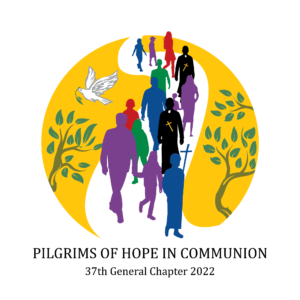 In this uncertain scenario, we are preparing for our 37th General Chapter which will, hopefully, take place here in Italy, in September… the theme of the Chapter is: PILGRIMS OF HOPE IN COMMUNION. This is a bold statement, given the context in which we are living. Each noun in this phrase opens up many significant images, biblical and ecclesial, as well as stories and wisdom from folk culture. The theme will provide us with many points of departure for faith sharing and animation as we prepare for the Chapter.
Father Louis Lougen, OMI
Superior General
HAPPY FEAST DAY TO ALL OF YOU
The Letter of Superior General to the Congregation on the Anniversary of the Papal Approval of the Constitutions and Rules
Dear Brother Oblates, and all our Sisters and Brothers committed to living the Oblate Charism,
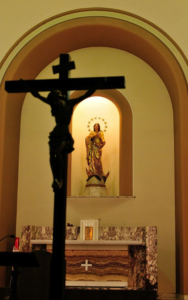 We celebrate with great joy and gratitude the 196th anniversary of the papal approbation of our Constitutions and Rules as the Missionary Oblates of Mary Immaculate! May we share in the profound conviction of Eugene de Mazenod that this approval was the work of divine Providence. We pray for one another, that we will be faithful in living this precious charism, a gift from the heart of St. Eugene who passionately loved Christ Jesus, the Church, and the poor. I am sure the Blessed Virgin Mary smiles on us, assisting us in our conversion to live our missionary charism with greater integrity. Happy feast day to all of you.