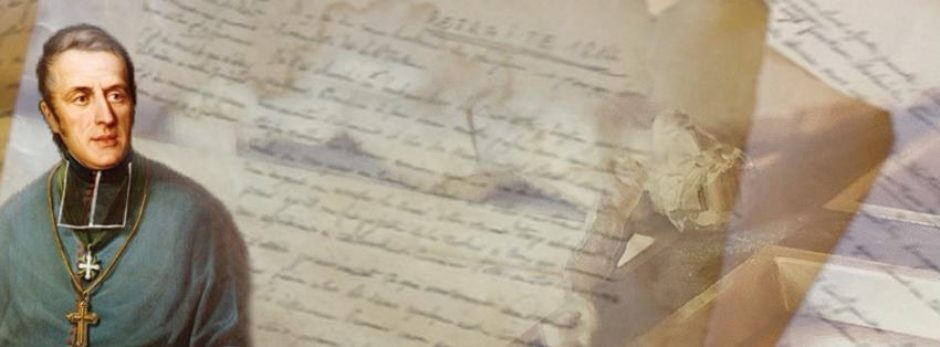
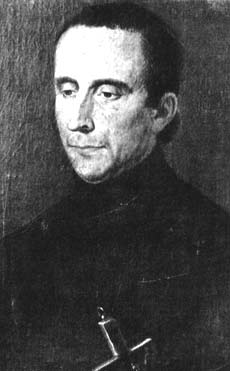
CARLO DOMENICO ALBINI OMI, 1790 – 1839

Angelo Capuano tells us about Carlo Domenico Albini, born in 1790 in Italy and ordained a diocesan priest in 1814.

In July 1823, he was appointed to teach moral theology in the major seminary of Nice. He did not limit his activity to teaching, however, but gladly did priestly ministry in the city’s cathedral. It was when he was helping the parish priest conduct a retreat for ex-prisoners and misfits in July 1824 that he met Fathers de Mazenod and Suzanne: the latter had been called in to preach this retreat.

Father Albini was struck by their apostolic zeal, by the missionary ideal which animated them, by their fraternal relationship. From this he began to entertain the idea of living in a religious community. At the end of the retreat, he decided to join the recently founded Society of the Missionaries of Provence.

In 1824 he began mission preaching – an activity that he excelled at for the rest of his life –  and then was appointed professor in the Oblate scholasticate in Aix. In 1825, he was to undertake to translate part of the Constitutions and Rules into Latin in preparation for their presentation to the Holy See for approval. It was Father Albini who pressurized the Founder and convinced him to go to Rome in view of obtaining an official recognition of the Congregation.

In October 1827, Father Albini was appointed to teach moral theology at the major seminary of Marseilles which had just been entrusted to the Oblates. At the end of July 1828, he was given the spiritual care of the “Work for the Italians” in Marseilles. This was an apostolate among the Italian immigrants and Father Albini carried it out with passionate dedication.

Appointed to the group of Oblates going to Corsica, Father Albini had to wait until October 1835 before he could join the missionary group. The Founder, in fact, had hesitated a great deal before letting him go, for he saw Father Albini as almost indispensable for the apostolic service he was rendering to the Work of the Italians.

He was a seminary professor and a successful missionary preacher who was known for bringing reconciliation between warring families and communities.

He became seriously ill in November 1838, to the point that his death was feared to be imminent. He rallied somewhat in February 1839 and was beginning eagerly to look ahead to more mission preaching. His health become more problematical, however, and he began to weaken. He died on May 20, 1839.

Father Albini’s demise was felt as a grave loss for the Congregation, especially so by the Founder who considered him an example of apostolic zeal and holiness of religious life that all Oblates should look up to as a model. The people, too, lamented his passing and began to look upon him as a saint. His cause for beatification is complete, and awaits the mandatory miracle through his intercession.
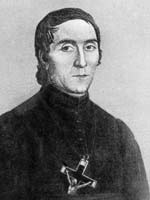
https://www.omiworld.org/lemma/albini-charles-dominique/

see also https://www.omiworld.org/our-charism/our-saints/oblate-causes/venerable-charles-dominique-albini-1790-1839/biography/

Posted in WRITINGS | 1 Comment

THREE OF THE BEST MISSIONARIES

Eugene had written about the mission to Corsica: :

But fulfilling this task is going to cost us very heavy sacrifices.

Letter to Hippolyte Guibert, 18 October 1834, EO VIII n 493

The Oblates were small in number and heavily committed in France.

Because of the quality men that you need, it will cost me a lot to tear them away from the various ministries that they are carrying out with incredible blessings and success

True to his word, Eugene sacrificed the missionaries on mainland France to give the Corsican seminary three of his best Oblates: Fathers Albini, Guibert and Telmon.

You are aware of Father Albini’s reputation: he is a learned theologian and also a holy missionary; he is teaching theology with distinction since a great number of years and he spends his vacations in evangelizing the poor. Besides he is doing such good work here at Marseilles that by taking him away from here I am going to offend everyone; he’s the man you need. I cede him to you. A dogma professor will go with him, a man of talent who teaches Holy Scripture and liturgy. Then I will give you as superior the priest[2] who is most distinguished in our regions for his deep piety, his vast knowledge and his delicate and refined spirit. He is greatly appreciated in the diocese of Gap where he is the superior of the shrine confided to us; impossible to say who reveres him more, the bishop, the clergy or the lay people. I don’t know how I will come to terms with all those groups, but that’s of little importance; he is also the man you need, at least in the beginning …

Letter to Bishop Casanelli d’Istria, 19 September 1834, EO XIII n 83

Posted in WRITINGS | 1 Comment

JOSEPH HIPPOLYTE GUIBERT OMI, 1802 – 1886

Let’s pause in the narrative to study the figure of Father Guibert more closely.

He was born in Aix-en-Provence, December 13, 1802 and entered the major seminary in Aix in 1819. Four years later he joined the Missionaries of Provence and made his oblation in 1823 and 1824 and on August 14, 1825, he was ordained to the priesthood in Marseilles by Bishop Fortuné de Mazenod.

In 1826 he was appointed master of novices until 1828 when he was sent to Notre-Dame du Laus. For the next five years he was superior of the community, director of the Marian shrine and preacher of parish missions.

Yvon Beaudoin writes: “As superior of the major seminary of Ajaccio from 1835 to 1841, Father Guibert showed himself worthy of the confidence the Superior General had placed in him. In a few years, he succeeded in regaining possession of the former seminary and added three stories to it. The number of seminarians soon went from fifteen to more than one hundred with some competent professors, especially Father Albini for moral theology, Father Telmon for Sacred Scripture and Father Moreau for dogmatic theology. In order to obtain subsidies, Father Guibert often had to travel to Paris where he developed the acquaintance of and became friends with the government ministers and Louis-Philippe, the King. It was at this time that he displayed his talents as a diplomat in bringing about a reconciliation between Bishop de Mazenod and the King who wanted in no way to see a Bishop of Icosia in France, a bishop appointed in 1832 by Pope Gregory XVI without government authorization.

In Paris, the government, who, at the time, appointed the bishops, was not slow to look upon the superior of the seminary in Ajaccio as a candidate for a see. He was appointed to the see of Viviers. And on March 11, 1842, Bishop Eugene de Mazenod consecrated him bishop.”

As we will continue to reflect on the letters of St. Eugene, we will come across Fr. Guibert’s name very often. I thus only indicate a few events of his future life. He was Bishop of Viviers until 1857, and Archbishop of Tours until 1871, when he became archbishop of Paris unti his death in 1886. He was named a Cardinal in December 1873.

He was responsible for the building of the Basilica of the Sacred Heart in Montmartre in which he was buried in 1886

You can find many more details at https://www.omiworld.org/lemma/guibert-cardinal-joseph-hippolyte/

Posted in WRITINGS | 1 Comment

I ACCEPT WITH ZEAL AND EAGERNESS THE MISSION YOU ASSIGN ME.

Eugene writes to Hippolyte Guibert to appoint him to the mission of Corsica as Superior of the Oblate community and of the seminary

But who shall we send to found this important establishment? Professors are needed, above all a very capable superior is needed. We have no one in the Society but yourself, my dear friend, who unites in his person the qualities required to make this foundation. I say it before God and after wearing myself out with every conceivable possibility. I am all too conscious of the gap you will be leaving elsewhere; but I repeat, the foundation can be made by no one but you. You won’t expect me to give you proof; your modesty would have you rest while at the same time the spirit of obedience that fills you would impel you to accept.
We are going to be upside down for a year; no one more so than myself, but it is a necessity that must be submitted to in view of the immense good which must result from it.
Goodbye, pray to the holy Virgin for yourself, for me and for the whole family, that we may receive light, strength and perpetual help. With my affectionate embrace and blessing. + Charles Joseph Eugene, Bishop of Icosia.

Letter to Hippolyte Guibert, 18 October 1834, EO VIII n 493

Beaudoin writes: “Father Guibert was fourth assistant general; he replied to his Superior General: ‘I accept with zeal and eagerness the mission you assign me. In doing so I am motivated both by my loyalty towards the Society to which I unreservedly belong and by the filial love that I have pledged to you. This does not imply that I am worthy’ …”

Fr Guibert was living the norms that Eugene had written in the Oblate Rule of 1818:

“…Obedience in our Institute will be prompt, humble, complete.
In following the directives of superiors let our members keep before their eyes
God himself, for it is out of love for him that they obey and to him alone that they submit in the person of their superiors.”
Posted in WRITINGS | 1 Comment

THE FIELD SEEMS SO VAST AND FERTILE TO ME, THOUGH COVERED WITH THORNS

Once a decision had been reached, Eugene wrote to the Bishop of Ajaccio to communicate this.

I do not at all retract the promise that I made to support you with all my strength in the great mission that you must fulfil in the diocese that Divine Providence has just entrusted to your care. I have thanked the Lord countless times for having given those people a Chief Pastor like you, for I know how widespread evil is and I also know all that can be expected from your piety, zeal and the care which urges you to respond to your unfortunate flock, so long-abandoned.
The field seems so vast and fertile to me, though covered with thorns, that, if I were still only a simple priest, I would not yield to anyone the honor of going myself to you and helping you to clear it; but what I am not able to do myself, others will do for me.

Letter to Bishop Casanelli d’Istria, 19 September 1834, EO XIII n 83

It was the call of the most abandoned, which continues to motivate the Mazenodian family today:

The call of Jesus Christ, heard within the Church through people’s need for salvation, draws us together as Missionary Oblates of Mary Immaculate. Christ thus invites us to follow him and to share in his mission through word and work.

OMI Constitutions and Rules, C 1

Posted in WRITINGS | 1 Comment

I FEEL A NEED TO HELP OUT MY OWN JUDGMENT WITH THEIR IDEAS AND HELPFUL ADVICE

Eugene never took major decisions for the Congregation without a process of consultation. In regard to the invitation to send Oblates to Corsica, he shares the process with Father Guibert , who was one of his most trusted councilors.

My dear friend, today isn’t the first time I’ve bewailed the necessity of being separated from the men Providence has given me as councillors in the administration of the family.
I wouldn’t want to arrive at any decisions without hearing all of them; I feel a need to help out my own judgment with their ideas and helpful advice, inspired as they are with zeal for the family’s prosperity and the Church’s good in the exercise of the ministry that it embraces.
At this particular moment, more than ever, I would have liked to dialogue with you especially, before taking a decision which must have very great consequences, but it does not admit of the least delay. I am obliged to reply immediately, and once again I am afraid of not having enough time for the letter to arrive which must decide me, not on a mere changing of personnel, but on a real upheaval in our houses…
How can I put down on paper, in effect, the content of six days’ continuous dialogue with the sole assistant to whom I have access? I have weighed everything, pondered on it all; I have put all the objections to myself. I have considered all the disadvantages, and the inescapable conclusion is that we must be prepared for any sacrifice at all if we are not going to reproach ourselves for closing the door that Providence is opening to us.

Letter to Hippolyte Guibert, 18 October 1834, EO VIII n 493

Posted in WRITINGS | 1 Comment

A VAST HORIZON OPENS UP BEFORE US

By the middle of 1834 there were around 26 Oblates and 10 scholasticates in 5 communities: Aix en Provence, Marseilles, Laus, L’Osier in France and Billens in Switzerland.

At this time, the newly-appointed Bishop of Ajaccio, Corsica, Casanelli d’Istria, visited friends in Aix en Provence and met Eugene. In explaining the abandonment of the Church in Corsica: “poor parishes, numerous clergy but in general without formation, ignorant faithful, strife between families and clans,” he asked for help from the Oblates. Here were people who were indeed abandoned and who needed a relationship with Jesus Christ as Savior.

Eugene described the situation to Fr. Guibert, who had encouraged him for years to start a new mission outside of mainland of France

A vast horizon opens up before us; we are perhaps called to the work of regenerating the clergy and the entire people of Corsica.
The Bishop is calling us to direct the seminary, and he is ready to confide to us the missions in his diocese; we must take it or leave it. The latter choice would be unworthy, little though we may be able to do; it would be disheartening if we should find ourselves unable to respond to the pressing invitation which offers us everything we are hoping for. The truth is we are able to accept the offer we have longed for, and which we won’t ever have again if we turn it down now.
But fulfilling this task is going to cost us very heavy sacrifices.

Letter to Hippolyte Guibert, 18 October 1834, EO VIII n 493

That same spirit motivates us today:

To seek out new ways for the Word of God to reach their hearts often calls for daring; to present Gospel demands in all clarity should never intimidate us. Awareness of our own shortcomings humbles us, yet God’s power makes us confident as we strive to bring all people – especially the poor – to full consciousness of their dignity as human beings and as sons and daughters of God.

OMI Constitutions and Rules, C 8


Posted in WRITINGS | 1 Comment

SEMINARIES: WE WILL DEVOTE OURSELVES GENEROUSLY HEART AND SOUL TO SUCH A NOBLE AND IMPORTANT MINISTRY

The first request of the Bishop of Ajaccio was that the Oblates establish a major seminary for the education and formation of priests in Corsica.

Because of the quality men that you need, it will cost me a lot to tear them away from the various ministries that they are carrying out with incredible blessings and success; but I am determined to make every sacrifice to establish solidly the immense good that you have in view and which will be done, with God’s help, through the cooperation of the men of God whom according to your command I am going to place at your disposal to set up your Major Seminary.

Letter to Bishop Casanelli d’Istria, 19 September 1834, EO XIII n 83

The Founder’s biographer, Rey, gives the background to his immediate positive response to the Bishop’s request.

“But the missions, the first, and properly speaking, only end of the Oblate Congregation necessarily evoked another end, that of the sanctification of the clergy”.

“In fact, to prepare the people for the missions and even to make the missions possible, to support the work of the missionaries, to assure their success, to gather, maintain and carry on its fruits, it was necessary to have worthy priests, and holy priests at the head of their parishes…

In addition, we would say that the sanctification of the clergy, next to the missions, and with the missions, is the main end of the Missionary Oblates of Mary Immaculate. The holy Founder formally declared this to them: ‘Assuredly, the most excellent end of our Congregation next to the holy missions is the direction of major seminaries. For the missionaries would expend the sweat of their labors in vain in their attempts to snatch sinners from spiritual death if they did not have in the parishes priests imbued with the Spirit of God, faithfully following the example of the Divine Shepherd and pasturing with vigilant and constant care the sheep which had been brought back to the fold. That is why, to the extent that we are able, we will devote ourselves generously heart and soul to such a noble and important ministry’”.

See: https://www.omiworld.org/lemma/ends-of-the-congregation/

Posted in WRITINGS | 1 Comment

THE CARE WHICH URGES YOU TO RESPOND TO YOUR UNFORTUNATE FLOCK, SO LONG-ABANDONED

By the middle of 1834 there were around 26 Oblates and 10 scholasticates in 5 communities: Aix en Provence, Marseilles, Laus, L’Osier in France and Billens in Switzerland.

At this time, the newly-appointed Bishop of Ajaccio, Corsica, Casanelli d’Istria, visited friends in Aix en Provence and met Eugene. In explaining the abandonment of the Church in Corsica: “poor parishes, numerous clergy but in general without formation, ignorant faithful, strife between families and clans,” he asked for help from the Oblates. Here were people who were indeed abandoned and who needed a relationship with Jesus Christ as Savior – and Eugene responded to the need.

I do not at all retract the promise that I made to support you with all my strength in the great mission that you must fulfil in the diocese that Divine Providence has just entrusted to your care.

Letter to Bishop Casanelli d’Istria, 19 September 1834, EO XIII n 83

Posted in WRITINGS | 1 Comment

SO THAT HE MAY BECOME A GOOD PRIEST OF THE KIND THE CHURCH NEEDS

My dear Son, my intention is to ordain Brother Kotterer at the first ordination in Lent… I am sending him to Aix, my intention being that he enter the novitiate and spend the whole time there in profound retreat under the special direction of the master of novices. Please place this dear ordination candidate in his care as I have placed him in yours so that he may become a good priest of the kind the Church needs.
Affectionate greetings and my blessing to all.

Letter to Hippolyte Courtès, 1 March 1835, EO VIII n 507

The future priest is entrusted to the director of novices, Father Casimir Aubert, for his retreat.

Please take special care of Brother Kotterer. Take advantage of his retreat to instil in him the great principles of religious life: detachment especially, death to self, cheerful obedience, total dedication to the Church and to the (Oblate) family, support of his brothers, etc.

Letter to Casimir Aubert, 10 March 1835, EO VIII n 508

 The vision that Calixte Kotterer had been formed into, and which he is to be reminded of during his retreat is found in Eugene’s  document we today know as the “Preface”:

“What did Our Lord Jesus Christ do? He chose a certain number of apostles and disciples whom He formed in piety and filled with His spirit; and after having trained them in his school and the practice of all virtues, He sent them forth to conquer the world which they soon brought under the rule of his holy laws.
What must we, in turn, do to succeed in winning back for Jesus Christ so many souls who have cast off his yoke? We must work seriously to become saints, walk courageously in the footsteps of so many apostles who have left us such fine examples of virtue in the exercise of a ministry to which, like them, we are called; renounce ourselves totally, maintain in view exclusively the glory of God, the building of the Church, the salvation of souls; renew ourselves constantly in the spirit of our vocation; live in a habitual state of self-denial and in an unremitting determination to achieve perfection, working unstintingly to become humble, gentle, obedient, lovers of poverty, repentant, mortified, detached from the world and our families, brimming with zeal, ready to sacrifice our goods, our talents, our rest, our persons and our lives for the love of Jesus Christ, the service of the Church and the sanctification of our neighbour. Then, filled with confidence in God, we must enter the lists and fight unto death for the greater glory of God.”

from the Nota bene (1818 Rule)

 See also: https://www.eugenedemazenod.net/?p=66

Posted in WRITINGS | 2 Comments