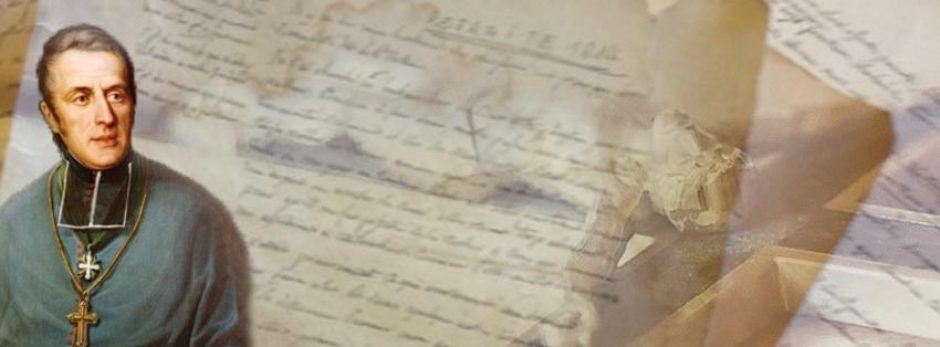
In April, 1848, Fr. Daly acquired a property in Ashbourne, Derbyshire, without informing the Superior General. He had hoped to establish a noviciate to serve the growing number of vocations. This project ended in disaster because to pay the inflated price demanded by the unscrupulous vendor, Fr. Daly was forced to offer the title deeds of Penzance as collateral. After prolonged litigation the decision was given against Fr. Daly and the property of Penzance mission was seized. The Oblates were forced to give up that mission. (https://www.omiworld.org/lemma/anglo-irish-province-1841-1945/)
To unravel this mess, Eugene sent Fr. Charles Bellon to England as superior:
God has not blessed this acquisition made in spite of the prescription of our holy Rules. Being an enterprise of a sort too human, it has suffered the fate of human affairs.
Letter to Fr. Charles Bellon in England, 15 September 1848, EO III n. 20.
The property of Ashbourne had cost 220.000 francs. To pay this sum, they could not count on the aid of the Work of the Propagation of the Faith, the revenues of which diminished considerably after the Revolution of 1848. The Congregation, burdened with debts, was absolutely unable to assume this new obligation. The Founder wrote to Fr. Semeria, in Ceylon:
Do you know we have more than forty Oblates and still more novices but we have nothing left for future investment, being so much in debt that we have no more security to offer for new loans. So Fr. Tempier is totally demoralized. He frets from morning to night that we have nothing left and we will have to dismiss the novices but, when it comes to doing so, my courage fails even more than his. We possess much masonry, large houses but no revenues and it is in this extreme need that the Propagation of the Faith leaves us in the lurch for they are not giving us anything, any more than they are giving to you
Letter to Fr. Étienne Semeria in Ceylon, 17 August 1848, EO IV n. 4.
REFLECTION
“In whatever man does without God, he must fail miserably, or succeed more miserably.” (George MacDonald).
Ever mindful that Eugene was a man of his times, I find myself being invited to reread his words to Fr. Bellon in England: “God has not blessed this acquisition made in spite of the prescription of our holy Rules. Being an enterprise of a sort too human, it has suffered the fate of human affairs.” Not comfortable to read and look at how they might appear in our lives today in the 21st century.
They seem to draw a very high wall that divides human life and divinity. Eugene reminds us of how we are invited to live according to a specific way and be nourished by the OMI Constitutions and Rules that shine in a particular way in our acceptance and offering of ourselves in the gift of oblation.
I think of the word “prescription” in the sense it is used by St. Eugene. Today the word has connotations of healing, of living in ways that are life-giving. Giving ourselves over to the OMI Rule of Life will not only invite us but will enable us to stand in a particular light showing who we are and who we have been created to be.
Yes, we are all human, and in a sense divine because of how our beloved and crucified Saviour gave himself in death so as to receive new life. Becoming one, in community with, free to accept and live a particular way of being – these experiences becomes our compass points, our signposts as we celebrate and stumble in the light of God’s love upon our journeys homeplaces on our journey.
“By growing in unity of heart and mind, we bear witness before the world that Jesus lives in our midst and unites us in order to send us out to proclaim God’s reign.” C 37)