-
Recent Posts
Recent Comments
- Eleanor Rabnett, Lay Oblate on THROUGH A GIFT OF THE FATHER OUR OBLATE FAMILY CHOOSES THE WAY OF THE EVANGELICAL COUNSELS (C12)
- Eleanor Rabnett, Lay Oblate on THE EVANGELICAL COUNSELS ARE INDISPENSABLE (C12)
- Eleanor Rabnett, Lay Oblate on ALL MEMBERS OF THE OBLATE CHARISMATIC FAMILY CHOOSE THE WAY OF THE EVANGELICAL COUNSELS (C12)
- Eleanor Rabnett, Lay Oblate on BEATITUDES: TO CONTINUALLY RENEW OURSELVES IN THE SPIRIT OF OUR VOCATION (C11)
- Eleanor Rabnett, Lay Oblate on LEAVEN OF THE BEATITUDES AT THE HEART OF THE WORLD (C 11)
Archives
Meta
-
PAPAL APPROBATION: RECOGNIZING THE COMMITMENT TO SPREAD MARIAN DEVOTION
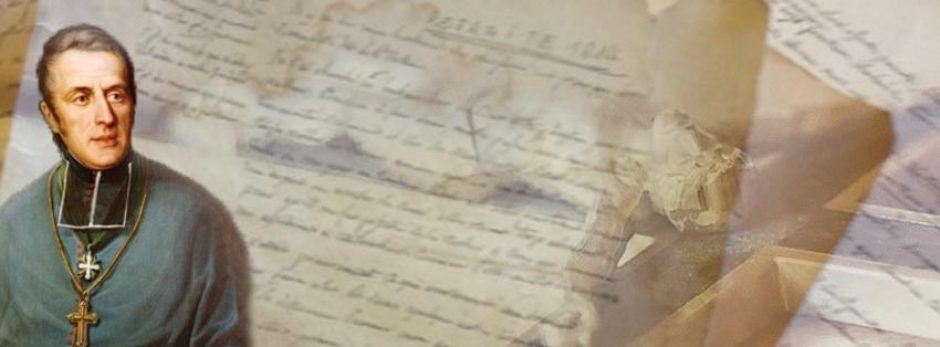
POPE LEO XII
Posted in WRITINGS
Leave a comment
PAPAL APPROBATION: RECOGNIZING THAT THE CHURCH HAS SPOKEN
In legal language, the Pope states that because the Congregation of the Oblates of Mary Immaculate has been approved by the Church, this approval is valid throughout the world and no local ecclesiastical authority can go against it.
It was for this recognition that Eugene had worked so hard to achieve: to be universally recognized as missionaries for the most abandoned and have the backing and support of the Church to facilitate this ministry in the most difficult conditions. The Oblate dream was blessed and assured of ongoing support.
POPE LEO XII
FOR FUTURE REMEMBRANCE OF THE MATTER
In what has been stated above the same judgement and decision must be given by all judges whether ordinary, or delegated, and also by the Auditors for the causes of the Apostolic Palace, by the Cardinals of the Holy Roman Church, even those who are Legates A Latere, by Vice-Legates and Nuncios of the Holy See. And We withhold from all without exception the faculty and authority to interpret or judge in a different manner. Moreover, We render null and void beforehand any attempt to decree otherwise, knowingly or unknowingly, by any person or by any other authority, the Apostolic Constitutions, ordinances and other decrees to the contrary not-withstanding.
…Given at Rome, at St. Peter’s, under the Fisherman’s Ring, on the twenty first day of March, 1826, in the third year of Our Pontificate.
Pope Leo XII
Apostolic Letter of Approbation, 21 March 1826, Missions O.M.I., n° 280 (1952), pp. 568 ff.
As a result, today we confidently assert:
Our love for the Church inspires us to fulfil our mission in communion with the pastors whom the Lord has given to his people; we accept loyally, with an enlightened faith, the guidance and teachings of the successors of Peter and the Apostles. (Constitution 6)
Posted in WRITINGS
Leave a comment
PAPAL APPROBATION: RECOGNIZING OUR SUPERIOR GENERAL AS OUR SPECIAL STRENGTH AND SUPPORT
POPE LEO XII
FOR FUTURE REMEMBRANCE OF THE MATTER
Finally, since the exercise of supreme authority in this Congregation serves as its special strength and support and since also from its very beginning, and in conformity with its Rules, this same Charles Joseph Eugene de Mazenod has been entrusted with, it, We, in view of his personal merits, by the bestowal of Our own approval, maintain him as its Superior General.
These things We decree and sanction, and it is Our will that this Letter be now and in the future firm, valid, and efficacious, and that it possess and obtain its plenary and entire effects, and be of the fullest benefit in everything and in every place, both now and in the future, to all those to whom it is addressed.
…Given at Rome, at St. Peter’s, under the Fisherman’s Ring, on the twenty first day of March, 1826, in the third year of Our Pontificate.
Apostolic Letter of Approbation, 21 March 1826, Missions O.M.I., n° 280 (1952), pp. 568 ff.
Today the successor of Saint Eugene continues this ministry:
The Superior General is the Congregation’s living bond of unity. The example of his life, his apostolic zeal and the affection he holds for all Oblates stir the faith and charity of communities to ever greater efforts in response to the Church’s needs.
As the successor of St. Eugene de Mazenod, the Superior General will continually keep alive the missionary zeal at the heart of our charism, helping to break new ground at the service of evangelization.
CCRR, Constitution 133

Posted in WRITINGS
Leave a comment
PAPAL APPROBATION: RECOGNIZING OUR NAME AS THE EXPRESSION OF OUR IDENTITY
We have seen how Eugene was inspired to change our name and the importance of this for our understanding of our identity. With this Papal Brief, the change was officially recognized and we can say thatthe Church gave us the name of Missionary Oblates of Mary Immaculate.
POPE LEO XII
FOR FUTURE REMEMBRANCE OF THE MATTER
This being the situation, Our dear son Charles Joseph Eugene de Mazenod, Vicar General of the Bishop of Marseilles, Provost of the Chapter of the Canons of the Cathedral, and Founder of the said Society, has presented to Us a petition, humbly requesting Us, for the glory of God and the salvation of souls, to approve by Our Apostolic Authority, both this family and its Rules, and to honour it with the title of Missionary Oblates of the Most Holy and Immaculate Virgin Mary, so that it may not be confused with those other Societies which also bear the name of Oblates of St. Charles.
Therefore, having taken into consideration that this Society was enriched with indulgences by Pius VII, Our Predecessor, and by Ourselves, that its great usefulness has been recognised by many Bishops, and that it will prove of considerable aid and enrichment to the Church in her afflicted condition … We hereby with a ready and willing mind, establish it, and wish it to be known by the name of the Congregation of the Missionary Oblates of the Most Holy Virgin Mary, conceived without sin.
…Given at Rome, at St. Peter’s, under the Fisherman’s Ring, on the twenty first day of March, 1826, in the third year of Our Pontificate.
Pope Leo XII
Apostolic Letter of Approbation, 21 March 1826, Missions O.M.I., n° 280 (1952), pp. 568 ff.
In biblical thought, the concept of a “name” is so much more significant than phonetics. To know the “name” is to know the essence, character, or nature of a person. If a person has different names, they represent different aspects of his nature. When there is a substantial change in a person’s identity, there is also a change of name. (stpaulcenter.com/posts/the-power-and-purpose-of-names-in-scripture)
Posted in WRITINGS
Leave a comment
PAPAL APPROBATION: TO CONTINUE CARRYING OUT OUR DUTY WORTHILY, FAITHFULLY FULFILLING OUR SPLENDID VOCATION
POPE LEO XII
FOR FUTURE REMEMBRANCE OF THE MATTER
This Society has for its aim the following objects: …devote themselves principally to the work of preaching missions to the poorer classes in the local language, especially in places destitute of the aid of religion ; they give assistance to the clergy by providing them with suitable training in seminaries,and by being continually ready to assist parish priests and other pastors in the work of reforming the morals of the people through preaching and other spiritual exercises ; they generously bestow devoted care on the young, and they strive to withdraw this chosen portion of the Christian people from the seductions of the world by forming them into pious associations; lastly, they preach the divine word and administer the sacraments to those in prison, and accompany to the scaffold those condemned to death.
When, indeed, the great benefits flowing from this Society were perceived by all, its priests soon came to be spread far and wide, so that at this time they have four houses and a hospice, and their sacred ministry is exercised in six dioceses. They attend the hospitals of Aix, and likewise the prisons in that city and in Marseilles. At the present moment they have invitations to undertake the direction of several diocesan seminaries in various places…
…Given at Rome, at St. Peter’s, under the Fisherman’s Ring, on the twenty first day of March, 1826, in the third year of Our Pontificate. Pope Leo XII
Apostolic Letter of Approbation, 21 March 1826, Missions O.M.I., n° 280 (1952), pp. 568 ff.
How happy and satisfied Eugene must have been to have seen the Church recognition of the missionary goals that the Oblates had been practicing for the 10 years of their existence. Two hundred years later, what a list we can draw up of the missionary zeal of all the members of the Oblate Family in nearly 70 countries. To continue this impetus, we need to renew our commitment to the words of Eugene: “to carry out our duty worthily, faithfully fulfilling our splendid vocation” (Preface).
Posted in WRITINGS
Leave a comment
PAPAL APPROBATION: THE OBLATE COMMITMENT TO BEING COOPERATORS OF THE SAVIOR IS RECOGNIZED AND GIVEN A LEGAL STANDING IN THE CHURCH, THE BODY OF CHRIST
POPE LEO XII
FOR FUTURE REMEMBRANCE OF THE MATTER
… This Society has for its aim the following objects: its members, who are bound by simple but perpetual vows of poverty, chastity, obedience, and perseverance in the Institute itself, (from which vows they cannot be dispensed except by the Superior General or the Roman Pontiff).
…Given at Rome, at St. Peter’s, under the Fisherman’s Ring, on the twenty first day of March, 1826, in the third year of Our Pontificate.
Pope Leo XII. Apostolic Letter of Approbation
From the beginning Eugene had realized the need for a permanent commitment for the members of the Missionary Society. Initially he and Henri Tempier made this commitment on Holy Thursday 1816. Two years later, all the Missionaries pronounced vows.
These, however, had no legal standing in the Church and were regarded as private vows. These few lines in the Papal Brief showed that the Church recognized that the Oblates were a legal Institute of Consecrated Life within the Church. Once lifetime vows had been made, it was only the Pope who could dispense the Oblate from his obligations. If they were temporary vows, only the Superior General could grant a dispensation. Our oblation binds us to the Church which is the Body of Christ.
Over the years, many members of our Charismatic Family have felt the need to make some form of public commitment as Lay Associates. They are not vows, but an expression of the seriousness of their desire to live their lives in the spirit of St Eugene and the Oblate charism. Being made in public adds the element of accountability to the faith community.
Posted in WRITINGS
Leave a comment
PAPAL APPROBATION: RECOGNIZING THE GOD-GIVEN GROWTH OF THE OBLATE FAMILY
POPE LEO XII
FOR FUTURE REMEMBRANCE OF THE MATTER
The astonishing success however, with which Divine Providence was pleased to crown their efforts could not long remain hidden, and when the news of it began to spread, many of the neighbouring Bishops sought to secure these missionaries for their own dioceses, hoping thereby to give the fullest assistance to their own flocks. And so, the missionaries, favoured as they were by divine blessings, redoubled their efforts to follow in the footsteps of the saints, to toil earnestly in the pursuit of their own perfection, while at the same time labouring with all their heart for the salvation of souls.
And when the time finally came for them to go to different dioceses to announce the call to repentance, they decided to draw up constitutions and rules to serve as a bond of union and as a bulwark of protection for the infant Society. And they chose for themselves the title of Missionary Oblates of St. Charles, although up till then they had been commonly known as the Missionaries of Provence.
…Given at Rome, at St. Peter’s, under the Fisherman’s Ring, on the twenty first day of March, 1826, in the third year of Our Pontificate.
Pope Leo XII
Apostolic Letter of Approbation, 21 March 1826, Missions O.M.I., n° 280 (1952), p. 568 ff.
The Church was recognizing and approving the missionary methods of the Oblates, which Eugene had envisioned from the beginning:
They are convinced that if priests could be formed, afire with zeal for men’s salvation, priests not given to their own interests, solidly grounded in virtue – in a word, apostolic men deeply conscious of the need to reform themselves, who would labor with all the resources at their command to convert others – then there would be ample reason to believe that in a short while people who had gone astray might be brought back to their long-unrecognized responsibilities. “Take great care about what you do and what you teach,” was Paul’s charge to Timothy, “Always do this, and thus you will save both yourself and those who listen to you” (1 Tim 4: 16).
Preface of the CCRR
Initially we were only priests, then we evolved into religious as brothers and priests, and now we have evolved into an enlarged Oblate Family – each of us expressing our zeal for the salvation of souls according to our state of life and particular ministry.
Posted in WRITINGS
Leave a comment
PAPAL APPROBATION: RECOGNIZING THE NEED TO GIVE EVERYTHING IN OBLATION FOR THE MISSION
POPE LEO XII
FOR FUTURE REMEMBRANCE OF THE MATTER…
… It is now eleven years since Our Predecessor, Pius VII, of happy memory, shortly after he had by God’s protection guided back to port the storm tossed vessel of the Church safe and sound, openly stated that, due to the disorders of Church and State in France, preachers of the Gospel were needed for the work of recalling to the right path of salvation the sheep that had gone astray. And it was but a short time afterwards that a small band of priests was formed in the diocese of Aix, in Provence, in southern France, to undertake this sacred ministry…
…Given at Rome, at St. Peter’s, under the Fisherman’s Ring, on the twenty first day of March, 1826, in the third year of Our Pontificate. Pope Leo XII
Apostolic Letter of Approbation, 21 March 1826, Missions O.M.I., n° 280 (1952), pp. 568ff.
Eugene’s response to the storms the Church was facing, was his founding vision for us:
The sight of these evils has so touched the hearts of certain priests, zealous for the glory of God, men with an ardent love for the Church, that they are willing to give their lives, if need be, for the salvation of souls.
Preface of the CCRR
Posted in WRITINGS
Leave a comment
PAPAL APPROBATION: THE CHURCH HAS RECOGNIZED THE NEED FOR THE OBLATES IN HER MISSION
POPE LEO XII
FOR FUTURE REMEMBRANCE OF THE MATTER
If there ever was a time when this Apostolic See endeavored to encourage and support by every means at its command the zeal of those priests, who, burning with the fire of holy love, preach the Gospel throughout the whole world, and labor to implant in the minds of people the precepts and duties of the Christian religion and to instruct the people to be subject to lawful authority, We think of no more fitting occasion to do this than at the present when crimes of every kind, issuing like hideous monsters from the dark recesses of the past, again rear their heads and boldly spread their ravages from day to day, threatening to overthrow all rights, human and divine, and completely to efface, were it possible, every vestige of religion…
… Given at Rome, at St. Peter’s, under the Fisherman’s Ring, on the twenty first day of March, 1826, in the third year of Our Pontificate.
Pope Leo XII
Apostolic Letter of Approbation, 21 March 1826, Missions O.M.I., n° 280 (1952), pp. 568ff.
This echoes Eugene’s analysis of the situation of French Christians after the Revolution which impelled him to respond by creating the Oblates to reform the situation at close quarters.
The Church, that glorious inheritance purchased by Christ the Savior at the cost of his own blood, has in our days been cruelly ravaged. The beloved spouse of God’s only begotten Son is torn with anguish as she mourns the shameful defection of the children she herself bore. Christians, but apostates, and utterly mindless of God’s blessings, they provoke divine justice by their crimes….
Faced with such a deplorable situation, the Church earnestly appeals to the ministers whom she herself enrolled in the cause of her divine Spouse, to do all in their power, by word and example, to rekindle the flame of faith that has all but died in the hearts of so many of her children.
Preface of the CCRR
Posted in WRITINGS
Leave a comment
MISSION ACCOMPLISHED – THE SOLID FOUNDATION OF THE MISSIONARY ACHIEVEMENTS OF THE OBLATE FAMILY
After nearly four months of hectic activity, Eugene could announce that the text of the brief of approval was ready to be signed by the Pope! Mission accomplished!
APOSTOLIC LETTER OF APPROBATION GIVEN TO THE INSTITUTE, RULES AND CONSTITUTIONS OF THE MISSIONARY OBLATES OF THE MOST HOLY AND IMMACULATE VIRGIN MARY. BY OUR HOLY FATHER LEO XII. BY DIVINE PROVIDENCE, POPE
Announcing this to Henri Tempier:
I want to finish my letter today so that it can leave tomorrow. The text of the brief has been made ready; Mgr. Capaccini is taking it with him to be signed by the Pope. Perhaps it has been done by now, I have nothing more to do.
Letter to Henri Tempier, 20 March 1826, EO VII n 231
With this recognition, the Oblates could now face the future on a solid foundation, no matter what obstacles were placed in their way by external forces. The two centuries of the missionary achievements of our Oblate Family have proved this.
Because of the historical importance of this document, I will publish it in segments in the coming days.
Posted in WRITINGS
Leave a comment