THIS IS A COAT OF ARMS THAT SPEAKS

Eugene de Mazenod was officially installed as Bishop of Marseilles in December 1837. As Chief Shepherd he  had to draw up an episcopal coat of arms with an espiscopal motto that would be the “logo” and ideal of his ministry. Here he describes it to Father Courtès:
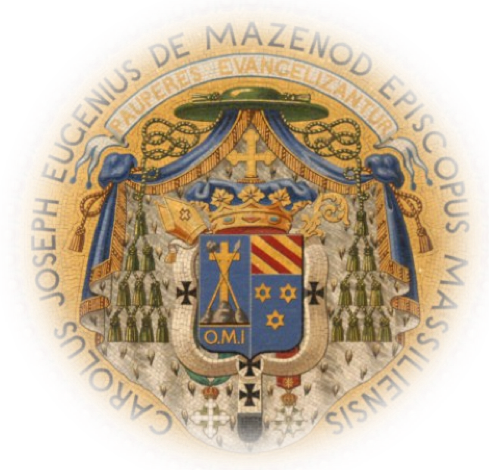
I did combine its coat of arms with that of my family, and you will notice the missionary cross shining brighter than my own coat of arms, and the motto so precious which is distinctive of this Society on the top of everything.

You will explain it to whomever wishes to listen, there is nothing to hide in this matter. This is a coat of arms that speaks

Letter to Hippolyte Courtès, 7 January 1838, EO IX n 656

A coat of arms usually shows the pastoral program of the person or group who draws it up. For Eugene, as a Missionary Oblate, it was the Cross that stood out above all else in his spirituality, lifestyle and ministry to those who were the most far away from knowing the Savior’s love.

His motto: “The poor are being evangelized” is the second part of the Oblate motto.

It is taken from Luke 7:22, where John the Baptist sent messengers to ask Jesus whether he was really the Messiah. Jesus’ reply:

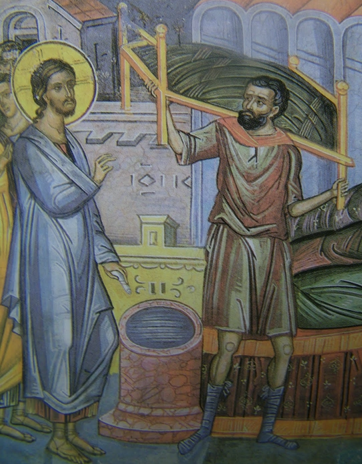
“Go and tell John the things you have seen and heard: that the blind see, the lame walk, the lepers are cleansed, the deaf hear, the dead are raised, the poor have the gospel preached to them.”

These were the credentials of the authenticity of Jesus’ ministry, and similarly Eugene wanted them to be the credentials of the ministry of the Oblates, and of his own episcopal ministry. What are my credentials as a Christian?

Posted in WRITINGS | 1 Comment

ACTIVITY FLOWING FROM AND A RESULT OF TIME OF COMMUNION WITH GOD

Sometime after being installed as Bishop of Marseilles at the end of 1837, Eugene drew up an undated daily schedule aiming at a balance between non-stop demands of activity and the need to be be spiritually replenished so that the day did not to become a directionless filling of activities..

I reproduce the whole program as it gives us a good idea of the importance of “being” in order to “do” for Eugene. His ministry flowed from and was a result of his time of communion with his God.

Morning prayer, oraison, mass, thanksgiving, little hours, Holy Scripture, spiritual reading, Vespers, Compline, rosary, adoration, Matins and Lauds, evening prayers, examen. I calculate 4 and a half to five hours.

Quite frequently as well, nearly every day, administration of the sacrament of confirmation, which can take on average another hour, so now we have nearly six hours for spiritual exercises.

What is left for study when one is the whole day long at the mercy of all-comers? Even so time has to be found for correspondence; two or three hours on Tuesday of each week have to be consecrated to the diocesan Council, Sundays are spent almost wholly in the church.

It is not easy to define the times best suited to each task. If I could get to bed at ten o’clock, I would get up at five, but it is usually nearer midnight than eleven when I get to bed. So let us fix on five-thirty. Let us be in the chapel a quarter of an hour later for oraison, to say mass, make thanksgiving and recite the little hours. It will always be close on eight o’clock when I leave the chapel.

As I am always made to waste time waiting for my dreary breakfast, I will go up to my room instead of going to the dining-room, and I will wait for someone to bring me up my coffee while occupying myself with the reading of the Holy Scripture.

If I could count on no one pushing past my door until ten, I would dispatch a lot of business, write a lot of letters, but experience has taught me that every day one comes up against people in a big hurry and who will not be reasoned with. Even so means must be found to keep them out until that time. From then until dinner [ed. the midday meal] no more rest.

After dinner some moments with the community, then one must escape from the house to work elsewhere. Otherwise the visits start up again and do not finish until evening.

“Daily Spiritual Exercises”, undated page sometime after 1837, EO XV n 189

If each of us were to draw up a similar daily program of “doing” and “being replenished”, what would it look like?

“Rising very early before dawn, Jesus left and went off to a deserted place, where he prayed. Simon and those who were with him pursued him  and on finding him said, “Everyone is looking for you.”. Mark 1:35-37)

Posted in WRITINGS | 1 Comment

OUR NEED OF A CATHEDRAL PROPORTIONATE TO THE GRANDEUR AND IMPORTANCE OF THE CITY

Once Eugene had been named as Bishop of Marseilles it was necessary to conclude a number of lengthy formalities with the Vatican and with the Franch Government before being formally installed. The last of these to go to Paris to take his oath of allegiance to the King.

I took my oath standing, the minister of worship read the short formula. The king said very courteous things about it; he made me sit beside him.

Eugene de Mazenod’s Diary, 30 November 1837, EO XVIII

A few days later he met with the King again. Together with the Queen, whom Eugene had known when he was a young man in exile in Sicily some thirty years earlier. He made good use of this opportunity.

In that same audience, I spoke to the king about our need of a cathedral at Marseilles, proportionate to the grandeur and importance of the city. The king agreed and was not at all startled by my proposal that he provide us with a million francs over a period of ten years; I intend to ask the Chambers for triple that amount, but of that I said nothing.

Eugene de Mazenod’s Diary, 8 December 1837, EO XVIII

Marseilles was the second largest city of France, and had a tiny cathedral, so Bishop Eugene wanted to ensure having an appropriate building to honor the presence of God in his city. It took several decades to build, and Eugene never lived to see the completion of his project.

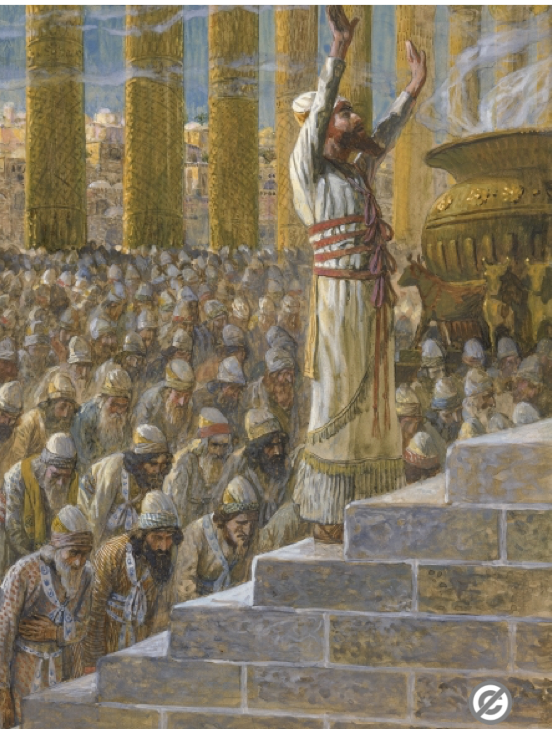
Solomon’s prayer at the dedication of the Jerusalem Temple:  “Is God indeed to dwell on earth? If the heavens and the highest heavens cannot contain you, how much less this house which I have built!” (I Kings 8:27)

For Eugene even more important than a building were the words of Paul:  “Do you not know that you are the temple of God, and that the Spirit of God dwells in you?” (1 Corinthians 3:6)

Posted in WRITINGS | 1 Comment

CHOOSE LIFE

“Yes, I will live my life in relationship with God and according to God’s commandments” is a commitment that has to be renewed regularly.

Twenty-one years into the preaching of parish missions, Eugene reexamined the importance of some of the ceremonies which were an integral part of Oblate mission preaching.

The renewal of the baptismal promises is obligatory. Great prominence should be given to this ritual. Our custom is to expose solemnly the Blessed Sacrament on this occasion.

Remembering that this was still a period of reconstruction of the faith that the Revolution and some subsequent governments had tried to downplay and destroy. God’s “law” for doing this is contained in the commandments given through Moses and through Jesus.

The new proclamation and acceptance of the law amidst a people who had, in some way, given up God’s commandments and who again want to be under the loving yoke of the Lord must be done in a way that leaves a deep impression.

The people were to participate actively in the proceedings.

That is why it is very important to lead everyone in solemnly affirming each one’s fidelity, in a loud voice, at the missionary’s invitation, who repeats from the pulpit, with the people, each commandment promulgated by the officiating priest at the altar, in a clear and intelligible voice, and then explains it.

Letter to Bruno Guigues, 5 November 1837, EO IX n 652

(For more details see: https://www.eugenedemazenod.net/?p=510)

A new heart I will give you, and a new spirit I will put within you; and I will take out of your flesh the heart of stone and give you a heart of flesh.

And I will put my spirit within you, and cause you to walk in my statutes and be careful to observe my ordinances.” (Ezekiel 36: 26-27)

“I have set before you life and death, the blessing and the curse. Choose life, then, that you and your descendants may live, 20 by loving the Lord, your God, obeying his voice, and holding fast to him. For that will mean life for you” (Deuteronomy 30: 19-20)

Posted in WRITINGS | 1 Comment

THIS IS NO ENTERTAINMENT

One of the powerful ceremonies of each mission was the penitential procession carried out very dramatically in order to convey an unforgettable life-changing message: “by his wounds you have been healed.”

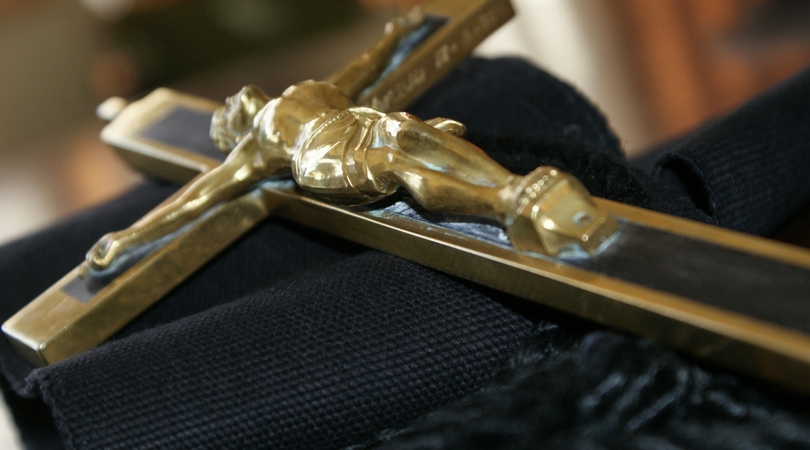
I repeat, it is the norm that the superior carry the cross during the penitential procession, after he has given a short exhortation from the pulpit to prepare the people for this public act of reparation.

This is no entertainment, but an act very much in conformity with the spirit of the Church and perfectly suited to the occasion. The superior has just preached to a people that has gone astray. He gives them the hope of pardon.

Reparation, however, is necessary. He takes on himself the sins of the people, in imitation of Jesus Christ whom he represents in their midst, …  he offers himself to God as a victim.

Letter to Bruno Guigues, 5 November 1877, EO IX n 652

The Oblate invited the people to load their sins on him and to see him carrying them away – reenacting the message of Jesus.

I Peter 2: 24-25:“He himself bore our sins in his body on the cross, so that, free from sins, we might live for righteousness; by his wounds you have been healed. For you were going astray like sheep, but now you have returned to the shepherd and guardian of your souls.”

(See also the entry https://www.eugenedemazenod.net/?p=492 and the following few entries)

Posted in WRITINGS | 1 Comment

THE “SIGNS AND WONDERS” IN THE PREACHING OF MISSIONS

The central mission of each Oblate community was the preaching of missions in the Provençal language. Since 1816, the format of these missions had been unchanged.

Eugene  reminds the Oblates of the highlights of each mission. Every ceremony was meant to have a dramatic attention-grabbing quality through which a Gospel message could be proclaimed, understood and become a moment of encounter with God. These tangible signs and actions show the continuity between the approach and preaching of Jesus continued by his disciples over the centuries.

What is prescribed in the Rule as for example:

      •  the entry of missionaries into a place they are going to evangelize…
      •  consecration to the Blessed Virgin,
      • renewal of baptismal promises,
      • tpromulgation of the commadments,
      • procession of the Blessed Sacrament,
      • funeral service and the instruction after the Gospel of the Requiem High Mass
      • procession and absolution at the cemetery,  
  • the penitential procession,
      •  the act of contrition…
      • the general Communion

are obligatory in all the missions.

Letter to Bruno Guigues, 5 November 1877, EO IX n 652

For I will not venture to speak of anything except what Christ has accomplished  through me to win obedience from the Gentiles, by word and deed, by the power of signs and wonders, by the power of the Spirit of God… as it is written,“Those who have never been told of him shall see, and those who have never heard of him shall understand.” (Romans 15: 18-21)

I have dealt with these in detail in earlier entries, from https://www.eugenedemazenod.net/?p=591  to  https://www.eugenedemazenod.net/?p=836

Posted in WRITINGS | 1 Comment

HOW MUCH DO I THANK THE LORD FOR KNOWING HOW TO SPEAK THE LANGUAGE OF THOSE I MUST INSTRUCT, AND WHO LISTEN TO ME BECAUSE THEY UNDERSTAND ME

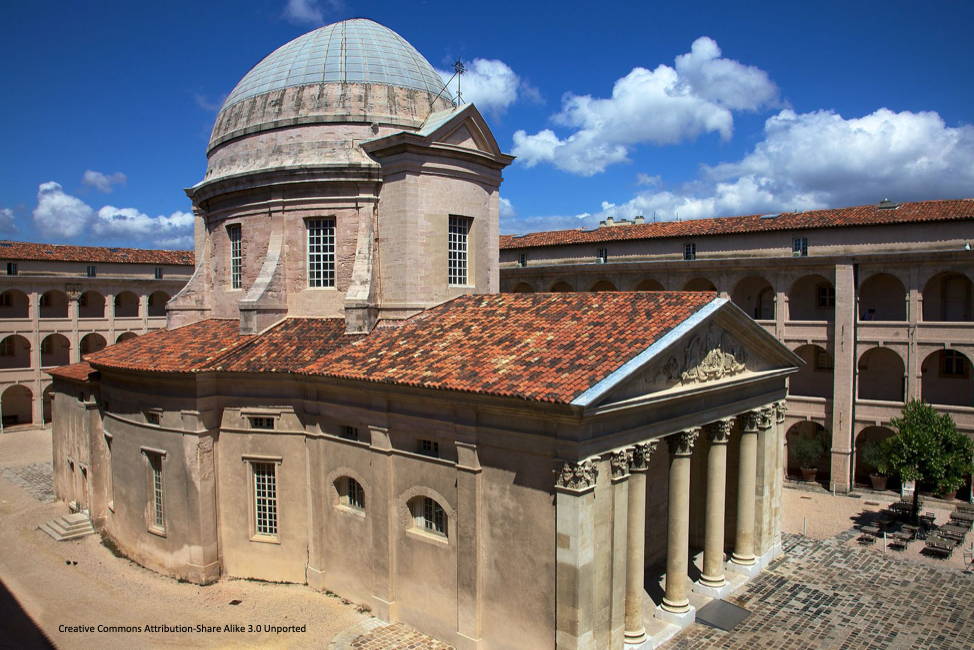
“Confirmation at the La Charité home. A great number of children were presented to me to receive this sacrament”

La Vieille Charité, Marseille


Always close to the people, especially the poor in this almshouse of Marseilles “for the vagrants and the homeless,” Eugene narrates that he preached in the Provençal language for an hour and-a-half!


I would have stopped sooner, if I had noticed that the listeners were not attentive, but old and young were inhaling my words, so to say, that is why I continued. That is what happens wherever I go.

Oh! how much do I thank the Lord for knowing how to speak the language of those I must instruct, and who listen to me because they understand me. I would not change my approach for all the gold in the world; my conviction has no need of the witness that I perceive every day as to the excellence of that method.

Eugene de Mazenod’s Diary, 26 September 1837, EO XVIII

“As Jesus went ashore, he saw a great crowd; and he had compassion for them, because they were like sheep without a shepherd; and he began to teach them many things.” (Mark 6:34)


Posted in WRITINGS | 1 Comment

REMEMBER THOSE WHO HAVE GONE BEFORE US AND KEEP THEIR SIGNIFICANCE ALIVE

Eugene recalls the death of a 28-year old Missionary Oblate as a result of typhus

 We just held the anniversary service for our Father Pons… Here we put feeling into what we were doing, and it was easy to recognize that it was heartfelt. That is how we should pray, especially as we should for the brothers whom we have so many reasons to remember, and to whom we want to witness that the memory of their virtues is still alive in the Congregation, which they have edified so much and served so well during their too-short lives.

This dear Father Pons was only 28 years old when he was taken from us, or rather, when God called him to himself. How much good had he already done in so few years.

Eugene de Mazenod’s Diary, 18 September 1837, EO XVIII

Remember your leaders, who spoke the word of God to you. Consider the outcome of their way of life and imitate their faith. Jesus Christ is the same yesterday and today and forever.  Do not be carried away by all kinds of strange teachings.”  (Hebrews 13:7-17)

Posted in WRITINGS | 2 Comments

BACK TO “NORMAL”

This adventure of exploring Eugene’s writings in chronological order began 10 years ago on 1 May 2010. Since then, 2295 entries have been published. I just cannot believe that this has all happened! And, Eleanor Rabnett has faithfully written her own much-appreciated daily response to most of them!!

Its aim has been to accompany people to get to know the wealth of the life and teachings of St Eugene de Mazenod through direct contact with his writings. He dedicated his life to loving the Savior, and to making him known – it is my hope for these daily reflections too.

The second purpose of this service is to make the writings available online. The homepage has a search engine (https://www.eugenedemazenod.net), where you can insert a word or a concept for research and find all the relevant texts connected with that.

There are 2295 entries which are filled with the various themes of Mazenodian family history, spiritualty, and mission. Many themes have been explored at length:

among many others.

So the invitation continues to use the search facility on the homepage (https://www.eugenedemazenod.net) to explore all this wealth of the Mazenodian Family.

We paused our journey with St Eugene in 1837 to meditate on a more focused response with Eugene to the Covid pandemic, especially at the beginning where there was not much spiritual support material available online. That aim has been accomplished, so tomorrow we pick up the chronological journey with St Eugene again.

Posted in WRITINGS | 2 Comments

EATING BREAKFAST

“Do you love me?” (John 21:16

“After Jesus had revealed himself to his disciples and eaten breakfast with them” is the beginning of today’s Gospel (John 21:15-19). Throughout Lent and the Easter season Jesus has been “eating breakfast” with us and nourishing us through the long days of isolation and learning to cope with a new reality. Each day he has asked us “Do you love me?” and has reminded us to care for his sheep.

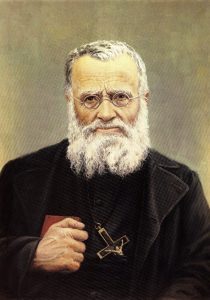
Today in the universal Church we celebrate the feast of Pope Saint Paul VI who beatified Eugene de Mazenod and summed him up as:

“Eugene de Mazenod was a man passionately in love with Jesus Christ and unconditionally committed to the Church.”

Eugene was able to be this only because of his intimate love for Jesus his Savior, with whom he “ate breakfast” every day as he cared for his sheep.

In the Mazenodian world we celebrate today the feast of Blessed Joseph Gerard OMI.

Surrounded by hardship and failure, he too continued to care for the sheep in Southern Africa because he “ate breakfast” every day with Jesus whom he loved and whose love he shared.

“Do you love me?” is the question Jesus asks me today as he “eats breakfast” with me – and then he says “look after my sheep who are all around you.”


(For further details on Blessed Joseph Gerard see https://www.eugenedemazenod.net/?p=3699)

Posted in WRITINGS | 1 Comment