-
Recent Posts
- PAPAL APPROBATION: TO CONTINUE CARRYING OUT OUR DUTY WORTHILY, FAITHFULLY FULFILLING OUR SPLENDID VOCATION
- PAPAL APPROBATION: THE OBLATE COMMITMENT TO BEING COOPERATORS OF THE SAVIOR IS RECOGNIZED AND GIVEN A LEGAL STANDING IN THE CHURCH, THE BODY OF CHRIST
- PAPAL APPROBATION: RECOGNIZING THE GOD-GIVEN GROWTH OF THE OBLATE FAMILY
- PAPAL APPROBATION: RECOGNIZING THE NEED TO GIVE EVERYTHING IN OBLATION FOR THE MISSION
- PAPAL APPROBATION: THE CHURCH HAS RECOGNIZED THE NEED FOR THE OBLATES IN HER MISSION
Recent Comments
- Mildred March on A SUMMARY OF TEN YEARS OF OBLATE MINISTRY
- Eleanor Rabnett, Lay Oblate on FAITH-FOCUSED INVESTMENT GROUPS: A PRESENCE WHERE DECISIONS AFFECTING THE FUTURE OF THE POOR ARE BEING MADE (Rule 9a)
- Eleanor Rabnett, Lay Oblate on VIVAT: A PRESENCE WHERE DECISIONS AFFECTING THE FUTURE OF THE POOR ARE BEING MADE (Rule 9a)
- Eleanor Rabnett, Lay Oblate on WE SHOW A VERY HUMAN FACE OF JESUS TO THE WORLD, ONE FULL OF COMPASSION AND SOLIDARITY (Rule 9a)
- Eleanor Rabnett, Lay Oblate on JUSTICE, PEACE AND THE INTEGRITY OF CREATION AS AN INTEGRAL PART OF EVANGELIZATION (Rule 9a)
Archives
Meta
-
“A father’s communication with his many children… that is one of the most agreeable occupations of my life” 1857
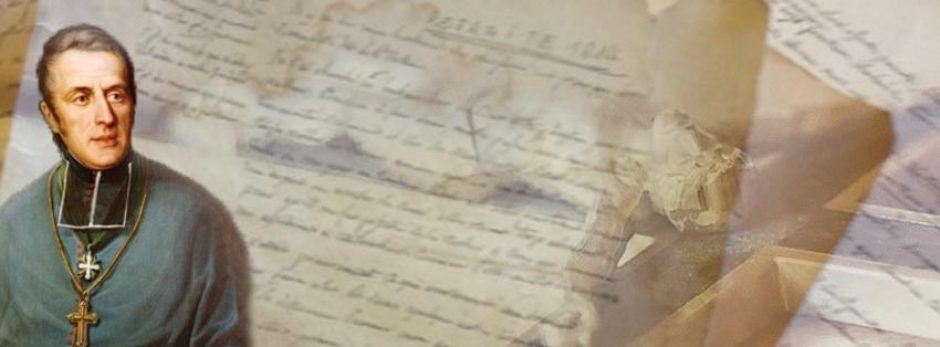
Last week many of the members of the Oblate Charismatic Family in Lacombe Canada Province entered into conversation with each other via zoom. Acknowledging our diminishment in this part of the world we looked at “Restructuring”, at what that meant for each of us? In a world that seems to tear down buildings and physical structures were we to be abandoned and torn down in order to find a new and better way?
What wonderful conversations we had with each other. The word hope was shared over and over again. And our shared thoughts gave body to the word conversion and it deepened within us. There was no sense of “us versus them” but rather we looked at reciprocity as we come together and walk as pilgrims of hope in communion… We don’t necessarily know what this will look like in our world in another ten or twenty years, but we are willing to step forward, to work with one another, nourishing not only ourselves but all those we meet. One dared to ask what it meant to be a missionary in today’s world. How are we sent.
I secretly wonder if those missionaries arriving on the various shores of North America, and traveling across many lands to arrive in what is now called Sri Lanka and South Africa, I wonder if those early Oblates might not have found ways to deepen their faith and to restructure themselves so as to better suit the new world that they were living in.
In a world where the word annihilation is hinted at, we see the tender shoots of love daring to shoot through the parched earth right here in our own gardens of life. The harvest will come in God’s time and not without some privations and struggles…