-
Recent Posts
- PAPAL APPROBATION: RECOGNIZING THAT THE CHURCH HAS SPOKEN
- PAPAL APPROBATION: RECOGNIZING OUR SUPERIOR GENERAL AS OUR SPECIAL STRENGTH AND SUPPORT
- PAPAL APPROBATION: RECOGNIZING OUR NAME AS THE EXPRESSION OF OUR IDENTITY
- PAPAL APPROBATION: TO CONTINUE CARRYING OUT OUR DUTY WORTHILY, FAITHFULLY FULFILLING OUR SPLENDID VOCATION
- PAPAL APPROBATION: THE OBLATE COMMITMENT TO BEING COOPERATORS OF THE SAVIOR IS RECOGNIZED AND GIVEN A LEGAL STANDING IN THE CHURCH, THE BODY OF CHRIST
Recent Comments
- Mildred March on A SUMMARY OF TEN YEARS OF OBLATE MINISTRY
- Eleanor Rabnett, Lay Oblate on FAITH-FOCUSED INVESTMENT GROUPS: A PRESENCE WHERE DECISIONS AFFECTING THE FUTURE OF THE POOR ARE BEING MADE (Rule 9a)
- Eleanor Rabnett, Lay Oblate on VIVAT: A PRESENCE WHERE DECISIONS AFFECTING THE FUTURE OF THE POOR ARE BEING MADE (Rule 9a)
- Eleanor Rabnett, Lay Oblate on WE SHOW A VERY HUMAN FACE OF JESUS TO THE WORLD, ONE FULL OF COMPASSION AND SOLIDARITY (Rule 9a)
- Eleanor Rabnett, Lay Oblate on JUSTICE, PEACE AND THE INTEGRITY OF CREATION AS AN INTEGRAL PART OF EVANGELIZATION (Rule 9a)
Archives
Meta
-
“A father’s communication with his many children… that is one of the most agreeable occupations of my life” 1857
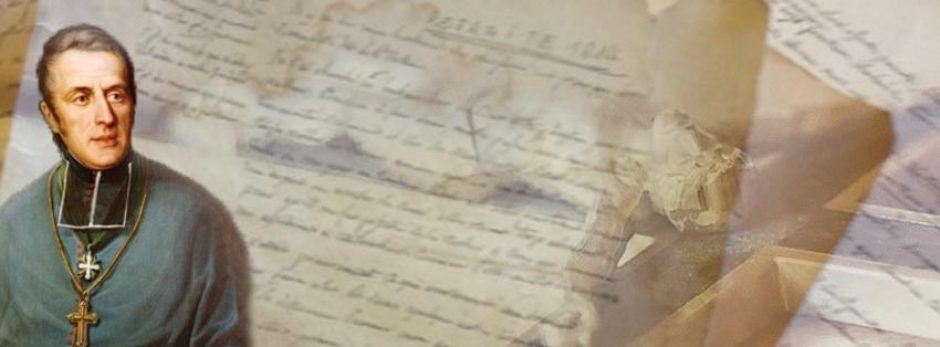
“The charism is what defines our own identity within the Church…” And it is something that is shared with us and which sheds a very particular light on us. It is in this light that we grow into who God has created us to be. And our journey of life is not always a straight line, it might take us awhile to find and accept where God has planted us to be.
I think of the words that Eugene penned to God on his retreat before being ordained as Bishop of Marseilles in 1837. Not all are born and created to be parish priests, just as not all of the lay people are created to be parents (in the traditional sense of the word), some are called to be teachers, doctors, Prison Chaplains, etc.
It is not that Eugene’s charism makes us holy, but rather how we live it, how we allow it to become a part of our DNA. It is not a title or an honor, it is simply the fidelity of our heartbeats, our breathing in and breathing out, our foundations. It is this creates the joy that we experience as we walk to where the Spirit leads us.
Anything less will fail to satisfy us only because it has become a part of the DNA that we share with others, where God has carved out a special niche in our hearts for those we are sent to walk with.
“Awareness of our own shortcomings humbles us, yet God’s power makes us confident as we strive to bring all people – especially the poor – to full consciousness of their dignity as human beings and as sons and daughters of God.” (C 8)
Our challenge is to retrieve this precision of vision after many years of foggy vision. St. Eugene, be our guide!