-
Recent Posts
- FOR THE REST, I DO MY BEST TO LEAVE IT TO GOD
- GOD ALONE KNOWS HOW TO REWARD WHAT WE HAVE DONE FOR HIM. SO, WE MUST DO EVERYTHING TO PLEASE HIM
- IT IS A CONSOLATION FOR ME TO BREATHE THE SAME AIR, TO OFFER THE HOLY SACRIFICE ON THE SAME ALTARS, TO BE ABLE TO PRAY AT HIS TOMB
- THERE IS NOT A CORNER OF ROME WHICH IS NOT A MONUMENT OF FAITH OR PIETY
- THE ROMAN MARTYRS ARE STILL THE OBJECT OF VENERATION OF PEOPLES
Recent Comments
- Eleanor Rabnett, Lay Oblate on FAITH-FOCUSED INVESTMENT GROUPS: A PRESENCE WHERE DECISIONS AFFECTING THE FUTURE OF THE POOR ARE BEING MADE (Rule 9a)
- Eleanor Rabnett, Lay Oblate on VIVAT: A PRESENCE WHERE DECISIONS AFFECTING THE FUTURE OF THE POOR ARE BEING MADE (Rule 9a)
- Eleanor Rabnett, Lay Oblate on WE SHOW A VERY HUMAN FACE OF JESUS TO THE WORLD, ONE FULL OF COMPASSION AND SOLIDARITY (Rule 9a)
- Eleanor Rabnett, Lay Oblate on JUSTICE, PEACE AND THE INTEGRITY OF CREATION AS AN INTEGRAL PART OF EVANGELIZATION (Rule 9a)
- Eleanor Rabnett, Lay Oblate on WALKING THE LINE BETWEEN PROPHETIC VISION AND SPIRITUAL SUSTENANCE (CONSTITUTION 9)
Archives
Meta
-
“A father’s communication with his many children… that is one of the most agreeable occupations of my life” 1857
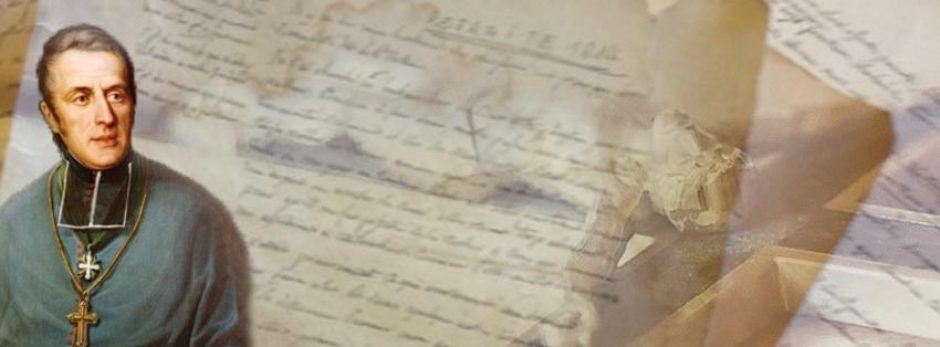
This morning I am reminded of the story of the Prodigal Son, with Eugene portraying the father in the story. “I had long been praying to Our Lord that He cause to shine a ray of His light on… would also touch his heart so that he would repent and repair the scandal of his obstinacy.” Here I see the love of a father for his son. Baudrand had not been an exemplary model of community. I doubt though, that Eugene would have called him back to France only to have him removed from the congregation: he held Baudrand in his love and so would have looked for a place better suited to Fr. Baudrand. And I wonder that even in Eugene’s anger and disappointment if he did not also look more deeply at Baudrand to see if he somehow recognized the poor man’s pain that might explain his behaviour. Love can raise us up and forgiveness will always grant us new eyes and a better way of seeing. And here I am thinking of Eugene’s conversion experience.
I am reminded of Jesus with his apostles and how he did not dismiss any of them. Even Judas was not shut out as Jesus sent him to do what he must, and we must not forget how he called Peter to be the rock upon which he built his church.
I think of the times that I have ‘reacted’ against another refusing to look at where their obstinate anger might be coming from; and even as I look back at the other I remember how my own pain has risen up after long periods, pain wearing the cloak of anger and righteousness.
The love of one who waits patiently to forgive a daughter or son, a friend or foe, a brother or sister – the focus changes with forgiveness. It is then that we become capable of seeing through the eyes of our crucified Saviour…